Hillside construction with aluminum framing: why lightweight, non-combustible framing is built for steep lots
Building on a hill costs more than building on flat ground. Most of that extra cost comes from the weight of the framing material and everything that weight forces you to do: deeper foundations, bigger retaining walls, heavier equipment, wider roads. Aluminum changes that equation.
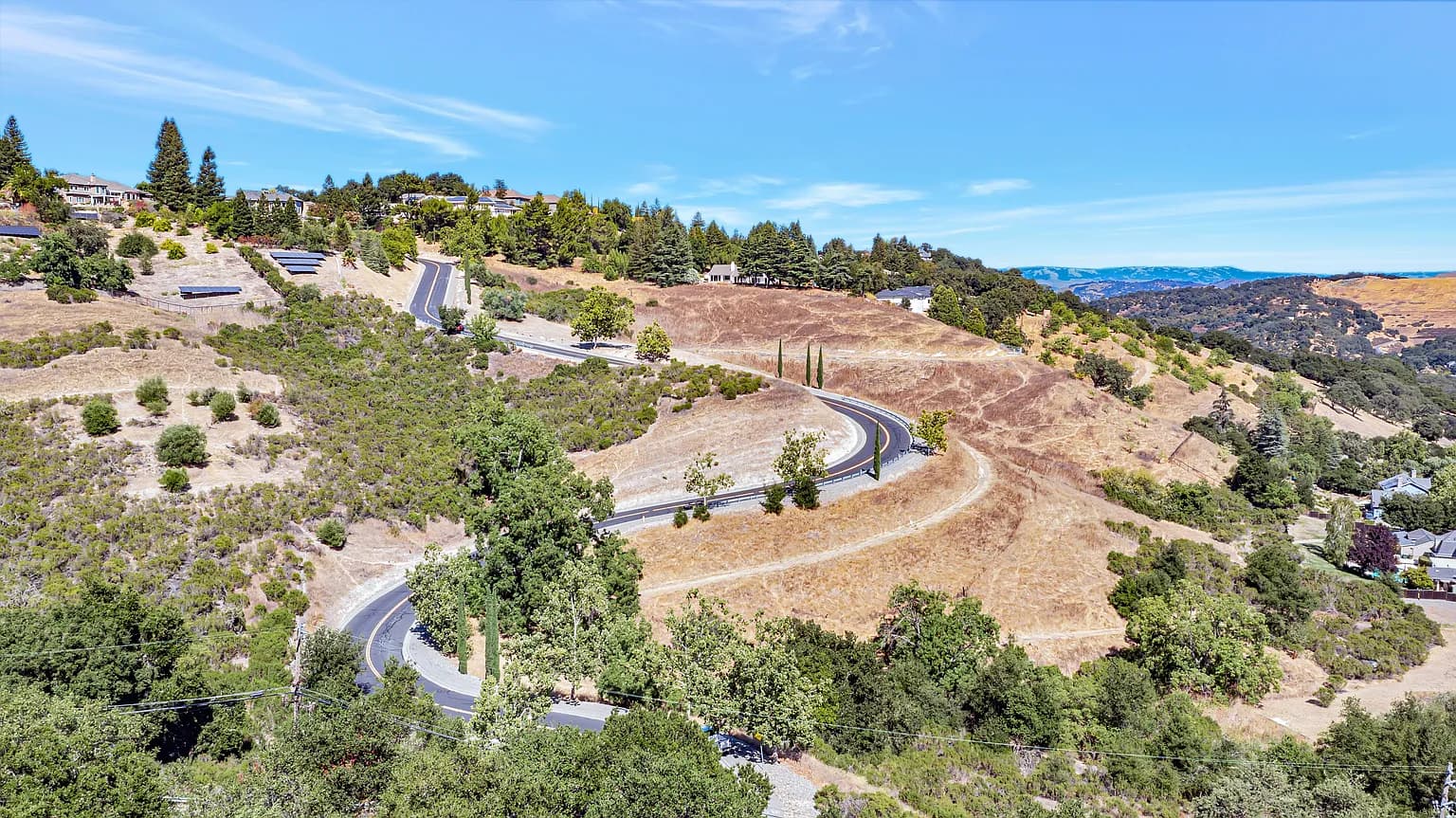
The physics of building on a slope
On a flat lot, gravity pulls straight down. Your foundation resists vertical loads and that is mostly it. On a hillside, your building is also fighting lateral forces, soil creep, differential settlement, and water runoff that wants to move your structure downhill.
The heavier your building, the worse all of these problems get. A heavy frame exerts more downward pressure on unstable soil. It creates larger overturning moments that push against your retaining walls. It demands deeper piers, more concrete, and more steel reinforcement in the foundation.
Geotechnical engineers designing hillside foundations specify helical piers, micropiles, or friction piles to anchor into stable soil or bedrock. The depth, diameter, and quantity of those piers are directly proportional to how much the building weighs. Cut the weight of the frame and you cut the foundation cost.
How frame weight affects hillside foundation requirements
Aluminum's strength-to-weight ratio is the key here. It provides comparable structural capacity to steel at a fraction of the mass. On a hillside, that mass reduction cascades into savings at every level: less concrete, fewer piers, smaller retaining walls, lower grading costs, and a better safety factor against slope failure.
The logistics problem nobody warns you about
Anyone who has built on a hill in the Bay Area knows the real budget killer is not the materials. It is getting those materials to the site.
Hillside homes in cities like Hillsborough and Burlingame sit on narrow, winding roads with tight switchbacks and limited shoulder space. Large delivery trucks often cannot make the turns. Mobile cranes need flat, stable ground to deploy outriggers, and soft hillside soils can cause a crane to overturn if the ground gives way.
Steel beams require cranes. Period. And crane lifting capacity drops dramatically as the working radius increases. On a hillside where the crane cannot park next to the foundation, you need a bigger crane, which costs more, needs a wider road, and may not fit on the site at all.
Aluminum framing ships flat-packed on standard trucks or even pickups. The components are light enough for workers to carry down a narrow side yard by hand. On site, if you need a lift, portable aluminum gantry cranes can be assembled by hand and still provide up to 5 tons of capacity. No street closure permits. No $5,000-a-day mobile crane rental. No scheduling delays waiting for equipment that may not even fit on your road. The same micro-logistics property is what makes remote luxury eco-resorts financially viable on cliffs and forest ridges where there is no access road at all.
Bay Area cities where this matters most
The affluent hillside communities around the Bay Area have some of the strictest building codes in the country. Each one creates specific constraints that aluminum framing addresses directly.
Burlingame
Burlingame's Hillside Overlay (H) Zone restricts massive grading and limits single retaining walls to 6 feet in height. If your lot exceeds a 20% grade, a comprehensive geotechnical soils report is required before any construction begins. Aluminum's lightweight, point-load pier foundation design allows the structure to follow the natural topography instead of requiring cut-and-fill pads that violate the overlay's intent.
Cupertino
Cupertino's Residential Hillside (RHS) Ordinance caps maximum floor area based on a mathematical formula tied to lot slope. The steeper the lot, the smaller the allowed building footprint. This places a premium on maximizing usable space within a constrained envelope. Aluminum framing eliminates bulky load-bearing interior walls, allowing open floor plans that make a 2,500 square foot home live like a much larger one. (More on how that works in our open floor plan post.)
Hillsborough
Hillsborough enforces CBC Chapter 7A plus aggressive open space guidelines including 100-foot defensible space and strict fuel ladder removal. The town also requires that hillside buildings preserve views and match the natural terrain. Aluminum's ability to connect at variable angles makes it possible to design split-level, terrain-following structures that wood framing struggles to achieve without significant custom cutting and labor.
Los Altos Hills
Los Altos Hills adopted CBC Chapter R337, requiring all exterior walls, siding, and decks on new construction and rebuilt structures to resist ember exposure and radiant heat. Wood framing can technically pass if buried behind non-combustible sheathing, but the underlying frame remains combustible. Aluminum framing means the entire structural skeleton is non-combustible from the inside out.
Los Gatos
Residential lots in Los Gatos climb from the town center straight into the Santa Cruz Mountain foothills. The western edge of town falls within CAL FIRE's Very High Fire Hazard Severity Zone, with CBC Chapter 7A enforced on all new construction in those areas. The lots combine steep, narrow access roads with expansive clay soils that swell and shrink with the seasons. A lighter aluminum frame puts less stress on those soils and qualifies as non-combustible without adding layers of fire-resistant sheathing over a wood skeleton.
Mill Valley
Mill Valley sits at the base of Mt. Tamalpais in Marin County. The city's own WUI code describes the terrain plainly: boxed canyons with steep, brush-covered slopes and narrow winding streets. The 2025 insurance crisis hit Marin particularly hard, and properties in Mill Valley's hill neighborhoods face some of the highest non-renewal rates in the Bay Area. Aluminum framing addresses both the logistical reality (getting materials up those roads) and the insurability question (non-combustible construction qualifies for "Safer from Wildfires" premium discounts).
Monte Sereno
Monte Sereno is a small residential city tucked between Los Gatos and Saratoga, entirely composed of hillside lots. The city enforces the California Building Code Chapter 7A for properties in Very High Fire Hazard Severity Zones, and most of the city qualifies. With lot sizes typically over half an acre and significant tree cover, the combination of fire exposure, slope, and limited road access makes it a natural fit for lightweight, non-combustible framing that can be assembled without heavy equipment.
Portola Valley
Portola Valley went further than most Bay Area towns on fire safety. The town extended Chapter 7A WUI building standards to all new construction across the entire town, not just properties in Very High severity zones. Their Home Hardening Ordinance bans wood shake roofs and wood siding outright, requires non-combustible fencing within 10 feet of the home, and mandates enclosed eaves. If you are building here, the code already assumes your framing system should not add fuel to a fire.
Saratoga
The western hillsides of Saratoga sit inside CAL FIRE's Fire Hazard Severity Zones. The city updated its WUI maps effective 2025-2026 to reflect evolving state fire safety standards and the ongoing property insurance crisis. New construction must meet strict defensible space and ignition-resistant material requirements. A non-combustible aluminum frame inherently satisfies the structural fire code without needing layers of compensating sheathing over a combustible wood frame.
Woodside
Woodside is one of the most rural-feeling towns on the Peninsula, with large lots set deep into redwood and oak woodland on winding single-lane roads. Nearly the entire town falls within a designated Fire Hazard Severity Zone, and the Woodside Fire Protection District enforces WUI building standards on all new construction and significant renovations. The access problem is acute here: some properties can only be reached by roads too narrow for a concrete truck, let alone a mobile crane. Flat-packed aluminum framing delivered on a standard pickup and assembled by hand is not a convenience on these lots. It is often the only practical option.
| Hillside challenge | Wood frame | Steel frame | Aluminum frame |
|---|---|---|---|
| Foundation load | Heavy dead load requires deep piers, massive retaining walls, and extensive concrete. Costs escalate on steep grades. | Heaviest option. Creates large point loads that demand oversized foundations. Expensive on slopes. | Lightest structural option. Smaller foundations, fewer piers, less concrete. Adapts to pier-on-grade designs. |
| Site access & delivery | Moderate weight. Standard trucks work, but engineered beams may need crane placement. | Heavy. Requires large trucks and mobile cranes. Narrow hillside roads are often impassable. | Ships flat-packed on standard trucks. Can be hand-carried down side yards. No crane needed. |
| Fire code (WUI) | Combustible. Can pass code only with extensive non-combustible sheathing over the frame. | Non-combustible. Passes ASTM E136. Requires corrosion coating in coastal zones. | Non-combustible. Passes ASTM E136. Natural corrosion resistance, no coating needed. |
| Seismic performance | Moderate ductility. Nailed connections prone to withdrawal under cyclic loading. | High ductility, but heavy mass attracts larger seismic forces on hillside foundations. | High ductility with low mass. Attracts lower seismic forces. Bolted connections resist cycling. |
| Grading restrictions | Often requires cut-and-fill pads for heavy foundations. Conflicts with hillside overlay codes. | Same issue. Heavy substructure demands significant site grading. | Point-load pier foundations follow natural grade. Minimal grading required. |
| Coastal corrosion | Rots in moisture. Requires toxic chemical treatments. Termite-prone. | Rusts. Galvanization degrades in salt air. Connectors corrode over time. | Self-healing oxide layer. Zero maintenance. No treatments needed. |
Fire resistance without the deep dive
Aluminum passes ASTM E136 as non-combustible. It does not ignite, does not burn, and adds zero fuel to a fire. When properly encapsulated with mineral wool and MgO sheathing, it achieves fire ratings of 60 to 120 minutes. For hillside lots in WUI zones, this is the difference between a home that the insurance market will cover and one that it will not.
We wrote a detailed breakdown of encapsulation systems, California Chapter 7A code requirements, the FAIR Plan insurance crisis, and how non-combustible framing qualifies for premium discounts of up to 16.4% in our wildfire zone construction post.
Seismic: lighter means safer on a hill
Seismic force is proportional to mass. A lighter building attracts lower earthquake loads. On a hillside, where overturning moments are already amplified by the slope, this is not a minor advantage.
Aluminum is ductile. It flexes and absorbs kinetic energy rather than cracking. The bolted connections in a Core X Frame system resist the cyclic loading that pulls nailed wood connections apart during an earthquake. After a seismic event, an aluminum frame maintains its load-bearing capacity where wood framing can suffer brittle fracture at fastener points.
Coastal corrosion and healthy indoor air
Salt-laden air can travel up to 50 miles inland. Bay Area hillside homes often sit in direct line of the marine layer. Steel connectors, hurricane straps, and truss plates corrode in this environment even when galvanized. Wood absorbs the moisture and begins to rot.
Aluminum forms a self-healing oxide barrier on contact with air. It does not rust, does not corrode in salt air, and requires zero maintenance coatings for the life of the structure. It also emits zero VOCs and cannot support mold growth, which matters in the fog-heavy microclimates of the Bay Area hills. For the full breakdown of how framing material affects indoor air quality, see our healthy home building materials post.
ADUs on sloped backyards
Backyard ADUs face the worst of the hillside logistics problem. The build site is usually behind an existing home with no direct road access. Everything has to come through a side yard or over the house.
Prefabricated aluminum frame components can be carried piece by piece through a 36-inch side gate and bolted together on a minimal pier foundation that follows the backyard slope. No heavy equipment tearing up the primary residence's driveway. No crane swinging beams over the roof. The variable-angle connections in the Core X Frame system allow the ADU to step with the terrain rather than requiring a flat pad.
For the full cost and timeline comparison between prefab and traditional ADU construction, see our ADU prefab aluminum framing post.
The framing choice ripples through the entire project
On a flat lot, framing material is one decision among many. On a hillside, it is the decision that determines the cost and complexity of everything else. A heavier frame demands a bigger foundation, a wider road, a larger crane, more grading, and longer permitting. A lighter, non-combustible frame reduces every one of those downstream costs.
For the affluent hillside communities of the Bay Area, where lots are steep, roads are narrow, fire codes are strict, and earthquakes are certain, aluminum framing is not a premium upgrade. It is the practical choice. And these same challenges show up across the country, from volcanic slopes in Hawaii to old mine benches in the Smokies. We cover those regions in our national hillside construction post. The same lightweight-frame-on-rough-ground logic also drives post-disaster shelter deployments, where survivors need housing built on debris-strewn or damaged land that cannot accept a heavy concrete foundation.
Planning a hillside build?
Talk to Khurshid about how aluminum framing works on steep lots. We can discuss foundation requirements, code compliance for your specific city, and logistics for your site.
Call Khurshid: (650) 450-1455Sources
- City of Saratoga - Fire Prevention and WUI Standards
- Los Altos Hills - Construction Requirements in Wildfire Risk Areas (R337)
- Hillsborough - Living Fire Safe in the WUI
- City of Burlingame - Hillside Overlay Zoning District
- Burlingame - Soils Report Guidelines
- City of Cupertino - Residential Hillside Development (RHS)
- Town of Los Gatos - Fire Hazard Severity Zone Map
- City of Mill Valley - Wildland-Urban Interface Code
- City of Monte Sereno - Zoning and Development Code
- Town of Portola Valley - Wildfire Laws and Regulations
- Woodside Fire Protection District - WUI Code Information
- Marshall Geo - Foundation Design for Hillside Construction
- Techno Pieux - Building on Sloped Terrain with Helical Piers
- MiniTec - Guide to Aluminum Framing for Industrial and Commercial Projects
- DYM Builders - Hidden Costs of Hillside Builds
- Alpine ITW - Light-Gauge Steel vs Wood Framing
- 80/20 Australia - Aluminium Framing System Advantages
- Frameworks Manufacturing - Resiliency of Aluminum Framing Systems
- Scottsdale Steel Frames - Steel vs Wood Framing Comparison
- Santa Clara County - Home Hardening in the WUI
- California FAIR Plan - Wildfire Hardening Discounts