Building in wildfire zones: what non-combustible framing actually means for your home and your insurance
The 2025 LA wildfires destroyed over 11,000 homes. Insurance carriers are leaving the state. The California FAIR Plan is holding $700 billion in exposure. If you are building or rebuilding in a fire zone, the framing material you choose now determines whether your home is insurable ten years from now.
What the 2025 fires actually proved
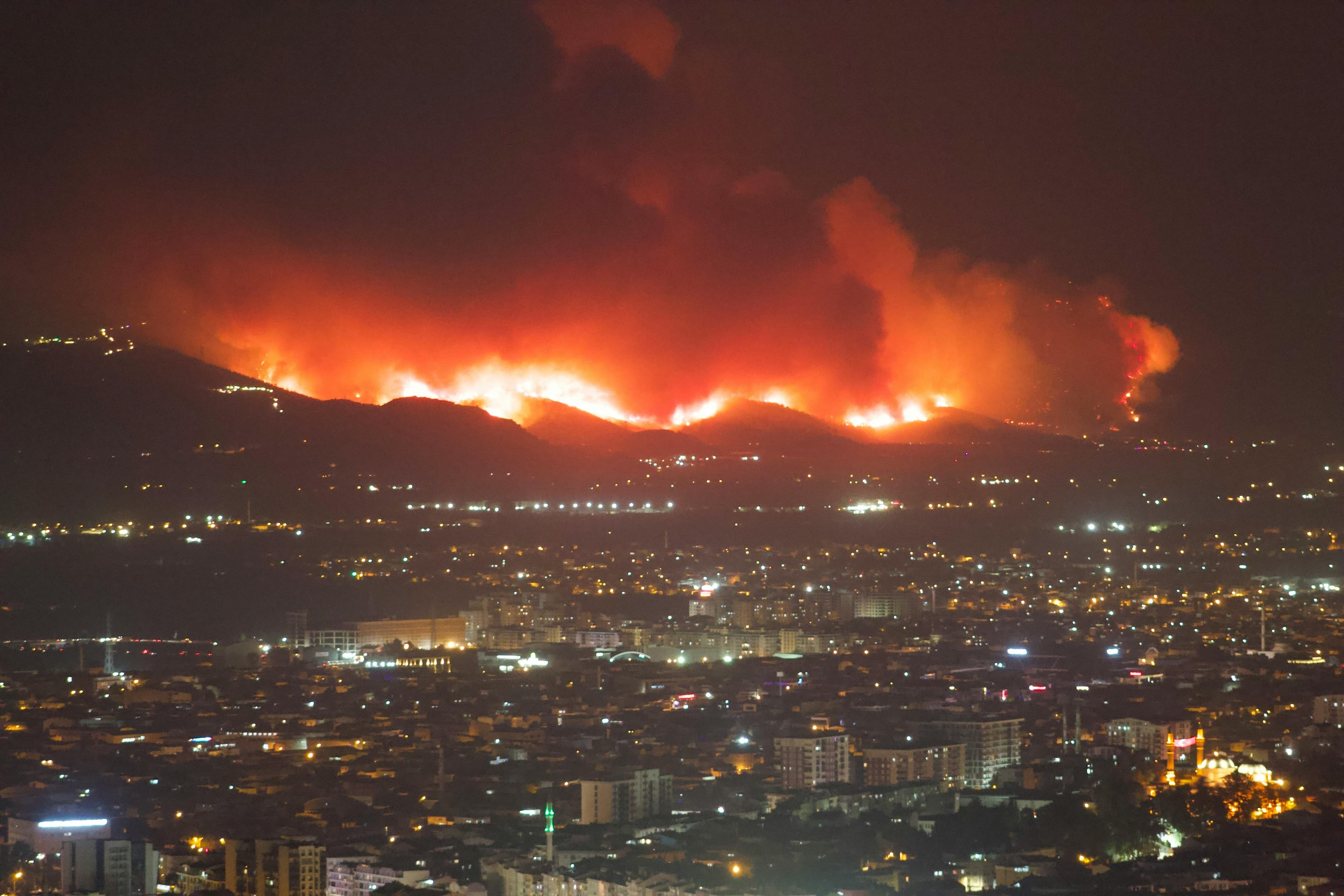
The Eaton and Palisades fires in January 2025 were not a surprise in terms of cause. Santa Ana winds, dry conditions, aging infrastructure. What was a surprise was the scale of loss. Over 11,000 single-family homes destroyed. Tens of thousands evacuated. Nearly $46 billion in residential real estate value was exposed within the fire perimeters. The total economic damage is projected to exceed $100 billion.
The post-disaster assessments pointed at the same thing they always point at: wood-framed construction acts as fuel. Dense residential neighborhoods built with combustible framing become continuous fuel beds. One home ignites, the radiant heat fractures the windows of the house next door, and the chain continues down the street. Wood framing also off-gasses toxic chemicals even under normal conditions, and treated lumber produces especially hazardous smoke when burned.
Modern construction has actually made this worse. Open floor plans supported by engineered wood I-joists are lighter and cheaper than solid timber, but they fail much faster in a fire. Underwriters Laboratories found that solid timber floors take about 19 minutes to collapse under fire conditions. Engineered wood I-joists fail in as little as 6 minutes. No warning, just collapse.
Time to structural collapse under fire conditions
Why aluminum does not burn (and what that actually means)
Aluminum passes ASTM E136, the standard test for material combustibility. In its solid, continuous form, aluminum does not ignite. It does not burn. It adds zero fuel to a fire. It does not spread flame.
I want to be precise about the limitations, because this matters. Aluminum melts at approximately 1,220°F (660°C). A fully developed wildfire or compartment fire can reach 1,500°F to 1,800°F. So bare, unprotected aluminum will lose structural strength and eventually melt in a sustained, intense fire.
The critical distinction is between the raw material and the engineered assembly. A bare aluminum beam is non-combustible but not fire-rated. An aluminum beam wrapped in mineral wool insulation and sheathed with sulfate-based magnesium oxide (MgO) board is both non-combustible and fire-rated, achieving certified ratings of 30, 60, 90, and 120 minutes under ASTM E119 furnace testing.
That difference matters enormously. Wood ignites at 570°F and then feeds the fire. Aluminum at 1,220°F still has not contributed a single BTU of fuel. It is buying time, not adding danger.
Fire performance by material
How aluminum, steel, and wood compare under fire conditions
How 60-90% of homes actually ignite in a wildfire
Most people picture a wall of flame consuming a house. That is not how most homes are lost. Post-disaster forensics consistently show that 60% to 90% of wildfire home ignitions come from wind-blown embers, not direct flame contact. California's Santa Ana winds can carry embers over a mile ahead of the fire front.
These embers land in roof valleys. They enter sub-floor vents. They accumulate at the base of exterior walls. If any of those surfaces are combustible, the ember finds an ignition point and the fire moves inside. A single ember landing on a wood window sill can compromise the glazing and breach the interior envelope.
This is why UC wildfire researchers established that creating a 5-foot non-combustible perimeter around the home (called Zone Zero) reduces structure loss by 17% on its own. When Zone Zero is combined with a fully non-combustible building envelope, survival rates reach 50%. Unmitigated structures survive at about 20%.
What California building code requires
California's Chapter 7A of the California Building Code and the 2025 WUI Code apply to all new construction and major retrofits in High and Very-High Fire Hazard Severity Zones. The requirements are specific:
- Class A fire-rated roof assemblies (metal, clay, or concrete tile)
- Ember-resistant vents with 1/16 to 1/8 inch mesh
- Ignition-resistant exterior siding with a minimum 6-inch non-combustible clearance from the ground
- Multi-pane tempered glass in non-combustible frames (aluminum or steel)
The Office of the State Fire Marshal maintains the WUI Products Handbook, listing approved materials under Category 8175 (Noncombustible Materials). Aluminum framing qualifies. Wood does not.
The insurance crisis and why framing material is now a financial decision
After consecutive years of multi-billion dollar wildfire losses, major insurance carriers left the California market. They stopped renewing policies in WUI zones entirely. Hundreds of thousands of homeowners were pushed onto the California FAIR Plan, the state's insurer of last resort. By late 2025, the FAIR Plan's exposure had reached $700 billion across 650,000 policies.
To stabilize the market, the California Department of Insurance created the "Safer from Wildfires" framework. Insurers must now provide actuarially sound discounts to property owners who implement proven mitigation measures. The math is straightforward:
- Residential policyholders using non-combustible materials can receive compound premium reductions of up to 16.4%
- Commercial policyholders can achieve discounts up to 13.8%
- The IBHS Wildfire Prepared Home Plus standard, modeled by Moody's, reduces Average Annual Loss expectancy by 35%
In Paradise, California, homes rebuilt to non-combustible standards have re-entered the private insurance market. Some residents have seen premium reductions of up to 800% compared to FAIR Plan rates.
The encapsulation system: how aluminum achieves fire ratings
Bare aluminum is non-combustible but not fire-rated. The fire rating comes from the assembly wrapped around it. Here is how that works in practice:
Mineral wool insulation is the first layer. Made from spun basalt rock and steel slag, it withstands temperatures above 1,800°F (1,000°C) without melting and produces no toxic smoke. Packed around the aluminum frame, it acts as a thermal barrier that keeps the metal below its critical temperature.
Magnesium oxide (MgO) sheathing is the outer layer. MgO panels withstand furnace temperatures up to 2,200°F (1,200°C), achieve a flame spread index of zero under ASTM E84 testing, and produce virtually no smoke. One important caveat: older MgO boards used magnesium chloride as a binder, which corrodes aluminum. Modern sulfate-based MgO boards eliminate this problem entirely.
Intumescent seals address thermal expansion. As aluminum heats, it expands (nearly double the rate of steel). Intumescent strips embedded in the frame connections swell when exposed to heat, sealing any gaps that could allow flame, heat, or smoke to pass through.
The combination of these three layers is what turns non-combustible aluminum into a fire-rated wall assembly capable of standing for 60 to 120 minutes under full furnace exposure.
That same assembly also handles the thermal bridging question that comes with any metal framing. The mineral wool packed around the aluminum studs interrupts the conduction path from exterior to interior, so the encapsulation you need for fire protection doubles as the thermal break that keeps the energy envelope intact. We cover the physics of this tradeoff in more detail in our vertical farm post, where aluminum's conductivity is simultaneously a benefit inside the building and a problem at the envelope.
The cost question
Non-combustible framing costs more upfront. Metal framing averages $3.50 to $6.50 per square foot compared to $1.00 to $5.00 for wood. That is a 10-30% premium on framing materials alone.
The cost equation flips over time. Wood framing requires ongoing termite treatment, rot repair, and significantly higher insurance premiums. Metal framing requires virtually zero structural maintenance. Case studies from the Steel Framing Industry Association show that non-combustible construction can save over $1.3 million in insurance costs over two years of construction on large projects, with annual liability savings of $300,000 thereafter.
For homeowners in WUI zones specifically, the insurance math often closes the gap on its own. If your choice is between a wood-framed home on the FAIR Plan at punitive rates versus a non-combustible home that qualifies for private insurance at a 16.4% discount, the monthly premium difference can equal or exceed the additional mortgage cost of the better framing material. The same insurance logic is why a growing number of rural buyers are moving away from wood pole-barn construction and toward non-combustible shells, a shift we cover in our barndominium aluminum framing post.
Grants and financial support for fire-resistant construction
Several programs exist to offset the upfront cost of non-combustible construction:
- The proposed Disaster Resiliency and Coverage Act (H.R. 1105) would provide $10,000 tax-free grants for qualifying mitigation upgrades, available to households earning under $250,000 (single) or $500,000 (joint)
- The CalAssist Mortgage Fund provides up to $100,000 in mortgage payments for homeowners whose homes were destroyed by qualifying disasters
- USDA rural repair grants offer up to $10,000 for elderly, very-low-income homeowners, with California pilot programs increasing limits for structural hardening
Seismic performance: the second hazard California buildings face
A building in California does not just need to survive fire. It needs to survive earthquakes too. Aluminum framing addresses both.
Metal framing is ductile, meaning it flexes and absorbs energy rather than cracking. During a seismic event, an aluminum frame yields safely, dissipating kinetic energy through its connections without the brittle fracture that can collapse concrete or unreinforced masonry. Because aluminum weighs significantly less than timber or concrete, the building attracts lower seismic loads in the first place (seismic force is proportional to mass). That lighter weight also means smaller, cheaper foundations, which is especially relevant for hillside lots where foundation costs escalate fast.
And unlike wood, aluminum does not warp, swell, or shrink with moisture changes. The structural tolerances engineered on the day of construction hold for decades, regardless of coastal salt air or inland humidity.
What this means if you are building or rebuilding
If your home was destroyed or you are building new in a WUI zone, the framing decision you make now has consequences for decades. It determines your fire resistance. It determines your insurance options. It determines your resale value in a market that is increasingly pricing in climate risk.
Non-combustible aluminum framing is not a guarantee that your home will survive a wildfire. No material can make that promise. But it does guarantee that your frame will not ignite, will not feed the fire, and will not contribute toxic smoke. Properly encapsulated, it buys 60 to 120 minutes of structural integrity while wood would have collapsed in 6.
The building code is moving this direction. The insurance market is pricing it in. The question is whether to get ahead of it or wait until it is mandatory.
The same WUI math also applies to two other categories of construction that are increasingly being built in fire-prone landscapes. The first is luxury eco-resort and glamping development, where remote properties in heavily forested areas often cannot get insured at all without non-combustible framing. The second is post-disaster rebuild infrastructure, where FEMA's BRIC grant program is now actively funding hazard-resistant non-combustible construction with 75% federal cost share. In both cases, the non-combustibility argument has stopped being a premium upgrade and started being a procurement requirement.
Building or rebuilding in a fire zone?
Talk to Khurshid about non-combustible aluminum framing for your project. We can walk through the code requirements, the encapsulation system, and the insurance implications for your specific situation.
Call Khurshid: (650) 450-1455Sources
- LAEDC - Impact of 2025 Los Angeles Wildfires Study
- McKinsey - Forging a Resilient Future for California's Homeowners and Insurers
- National Mortgage Professional - $46B in Home Value Exposed in LA Wildfire Corridor
- Elite Residence International - Pacific Palisades Fire Impact on Home Values
- California All Steel - Steel vs Wood Framing: Complete Comparison
- CAL FIRE - Home Hardening Guide
- Middle Park Conservation District - Fire Hazards of Open Floor Plans
- Aluminium Fire Systems - Fire Resistance of Aluminium Frames
- European Aluminium - Aluminium and Fire Safety
- California Dept. of Insurance - Safer from Wildfires Framework
- California FAIR Plan - Wildfire Hardening Discounts
- CA Dept. of Insurance - Landmark Study on Rebuilding LA to Wildfire Safety
- Sulfycor - Type X, Type C, and MgO Boards Compared
- MagMatrix - 7 Best Fire Resistant Wall Panels (2025)
- Owens Corning - Mineral Wool Fire Safety
- Steel Framing Industry Association - Insurance Savings with CFS
- CalHFA - CalAssist Mortgage Fund Program
- USDA - Single Family Housing Repair Grants (California)
- Steel Framing Industry Association - Strong and Resilient
- LA County Recovers - Resources for Design and Building Professionals