Why prefab aluminum framing is the best way to build an ADU in 2026
California ADU costs have climbed 44% since 2021. Wood rots. Steel rusts. And good luck finding a framing crew that can start before next quarter. There is a better option, and the numbers back it up.
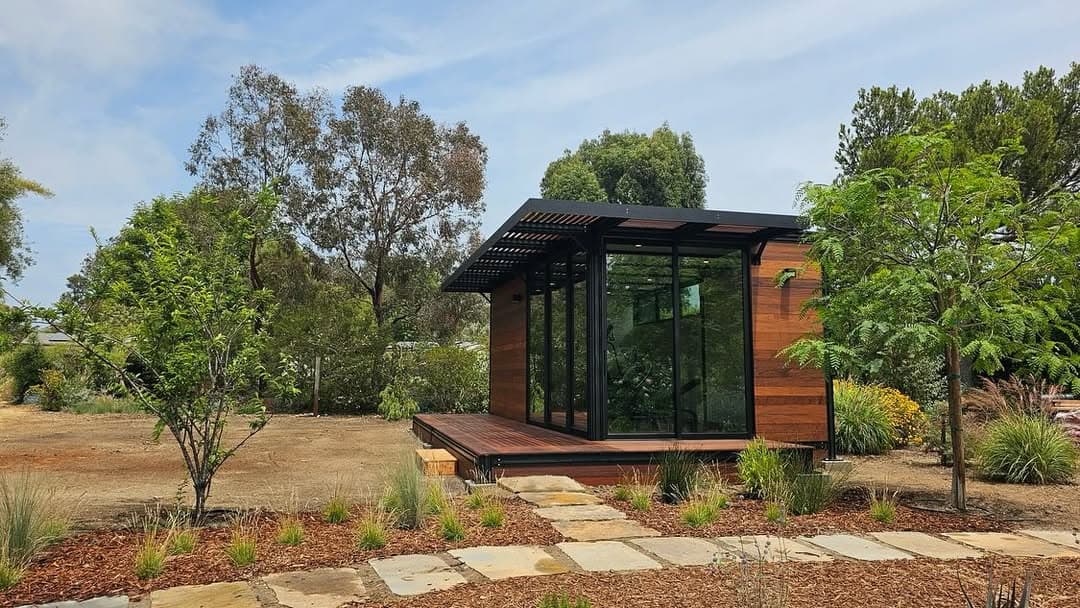
The ADU math has changed
If you looked at building a backyard ADU in California three years ago, you probably saw quotes around $200,000 to $250,000 for a decent one-bedroom unit. That number has moved. The California Construction Cost Index rose 44% between January 2021 and December 2025, according to data from the California ADU Experts cost calculator. An ADU that cost $300,000 in 2021 now runs closer to $430,000.
Most of that inflation comes from two places: labor and materials. Framing crews are booked out months in advance. Lumber prices swing 20-30% quarter to quarter. And if you are building with steel, you need certified welders, which are among the hardest trades to hire in California right now.
Prefab aluminum framing sidesteps most of these problems. I want to walk through why, with actual numbers.
Build time: 8 weeks vs. 8 months
A traditional site-built ADU in California takes 8 to 12 months from design to completion. A prefab ADU can be installed in 8 to 12 weeks. That is not a marginal improvement. That is a different category.
The reason is straightforward. With prefab aluminum framing, the frame components are extruded to exact dimensions in a factory while your site prep and foundation work happen simultaneously. When the components arrive, they bolt together. No cutting on site. No welding. No waiting for a specialized crew. A small team with basic tools can erect the entire frame in a matter of days.
Research from the Modular Building Institute confirms that prefabricated construction consistently cuts build time by 30-50%. A New Zealand study of 30 commercial buildings found that projects with at least 74% prefabricated content achieved 50% to 130% better schedule performance than conventionally built equivalents.
ADU build timeline comparison (weeks)
Why aluminum specifically, and not just any prefab material
Prefab is the delivery method. Aluminum is the material choice. They are separate decisions, and the material matters a lot for an ADU that is supposed to last decades in your backyard.
Wood framing is the default for most residential construction, and it has real problems. Wood rots when exposed to moisture. It warps over time. And in California, it attracts termites. The average termite damage repair in California costs $3,000 to $5,000 per incident, and many homeowners deal with infestations multiple times over a structure's life. None of that applies to aluminum. It is a non-organic material. Termites cannot eat it. It does not rot. It does not warp. (We wrote a deeper analysis of the hidden health hazards in wood framing, including formaldehyde off-gassing and toxic preservatives, in our healthy home building materials post.)
Steel framing solves the rot and termite problem but introduces a different one: corrosion. Steel rusts in any environment with moisture, and it requires protective coatings that degrade over time. Aluminum forms a natural oxide layer that protects it from corrosion without any coating. It just does not rust. Period.
Then there is weight. Aluminum weighs about one-third what steel does at equivalent structural capacity. That matters for an ADU because lighter framing means smaller foundations, cheaper transport to your site, and no need for heavy crane equipment in your backyard. Two people with a ladder can handle aluminum frame components. Try that with steel I-beams. The same hand-carryable property is the only reason high-end developers can build luxury eco-resorts on cliffs and remote islands where a flatbed truck cannot reach the build site.
The thermal bridging question is worth addressing here too. Metal studs conduct heat through the wall faster than the insulation around them, and aluminum conducts roughly four times more than steel. The solution is a thermal break built into the frame profile, an insulating strip that stops heat from traveling through the metal from one side of the wall to the other. The framing itself contacts about 3% of the wall surface. With breaks on that small area and continuous insulation everywhere else, the assembly meets Title 24 energy code. Wood studs are also thermal bridges, for what it is worth. They have lower conductivity, but the R-value penalty from wood framing is well documented in building science. People just never bring it up. For a deeper look at how the same property is managed in both directions, see our vertical farm post.
The welding problem (and how to avoid it entirely)
Steel framing requires certified welders. Certified welders are among the scarcest construction trades in the United States right now. The Information Technology and Innovation Foundation reported in January 2026 that the construction industry faces a shortage of roughly 439,000 workers, with skilled trades like welders being the hardest to fill. (The data center construction post covers how that shortage is reshaping commercial building too.)
If your ADU build depends on welding, you are competing for the same labor pool as data centers, commercial developers, and infrastructure projects, all of which can pay more than a residential job. That is a losing game for a homeowner.
Aluminum bolt-together framing systems eliminate welding from the process entirely. The connections use bolts and a patented locking mechanism. If you can use a wrench, you can assemble the frame. This is not an exaggeration. Core X Frame structures have been erected by crews of two to four people with no specialized training. The same no-welder logic is what makes this system work for rural builders putting up a shop-home hybrid on five to forty acres, which we walk through in our barndominium aluminum framing post.
Cost: not just the sticker price
A prefab ADU in California typically costs $180,000 to $280,000, while a comparable site-built unit runs $220,000 to $350,000. The upfront savings are real, around 10-25% depending on size and finishes.
But the bigger savings show up over time. An aluminum frame does not need termite treatment ($1,500-$3,000 every few years in California). It does not need rot repair. It does not need re-coating for corrosion. And at the end of its useful life, aluminum is 100% recyclable with no loss of material properties. The EPA notes that recycling aluminum uses 95% less energy than producing it from raw bauxite.
Over a 30-year ownership period, the maintenance savings from an aluminum frame versus a wood frame can easily reach $15,000-$25,000, not counting the avoided headache of dealing with structural damage from termites or rot.
What about ROI?
The financial case for ADUs in California remains strong. Rental income from a one-bedroom ADU in the Bay Area or Los Angeles runs $1,800 to $3,000 per month, depending on location and finish level. A $250,000 ADU paying $2,200/month in rent generates roughly a 10% annual return on investment before expenses.
The faster you get to occupancy, the sooner that return starts. If a prefab aluminum ADU gets you to move-in four months earlier than a traditional build, that is $8,800 to $12,000 in rental income you would have otherwise waited for. Speed is not just a convenience. It is money.
The bottom line
Wood rots. Steel rusts and needs welders you cannot find. Both take too long. Prefab aluminum framing builds faster, lasts longer, costs less to maintain, and can be assembled by a smaller crew with simpler tools. For California homeowners looking at an ADU in 2026, the material choice should be straightforward.
Ready to build your ADU with aluminum framing?
Talk to Khurshid about your project. Free consultation, no pressure.
Call Khurshid: (650) 450-1455Sources
- Abodu - ADU Cost California 2026
- Golden State ADUs - ADU Construction Costs Guide
- California ADU Experts - Construction Cost Calculator
- Modular Building Institute - Construction Timelines
- ITIF - Construction Industry 439,000-Worker Shortage (Jan 2026)
- Tampa Steel - Steel vs Wood Framing Comparison
- EPA - Aluminum Recycling Data
- MightyMite Termite - Termite Resistant Building Materials