From Hawaii to the Smokies: how aluminum framing handles the toughest hillside terrain in America
Every steep lot has the same basic physics problem: gravity pulling sideways, not just down. But the specific thing trying to destroy your house changes completely depending on where in the country you are building.
The shared problem, briefly
On flat ground, your foundation resists gravity pulling straight down. On a hillside, the foundation also has to resist the slope trying to push the building sideways and downhill. The heavier the structure, the worse this gets: more lateral pressure on retaining walls, deeper piers required, more concrete, more excavation, more cost.
We covered the detailed physics and the Bay Area city-by-city code breakdown in our Bay Area hillside construction post. This post is about what happens when you take the same steep-lot problem to five different geographies across the country, each with its own geology, climate, and set of things trying to destroy your house.
Hawaii: volcanic rock, lava tubes, and salt that eats steel
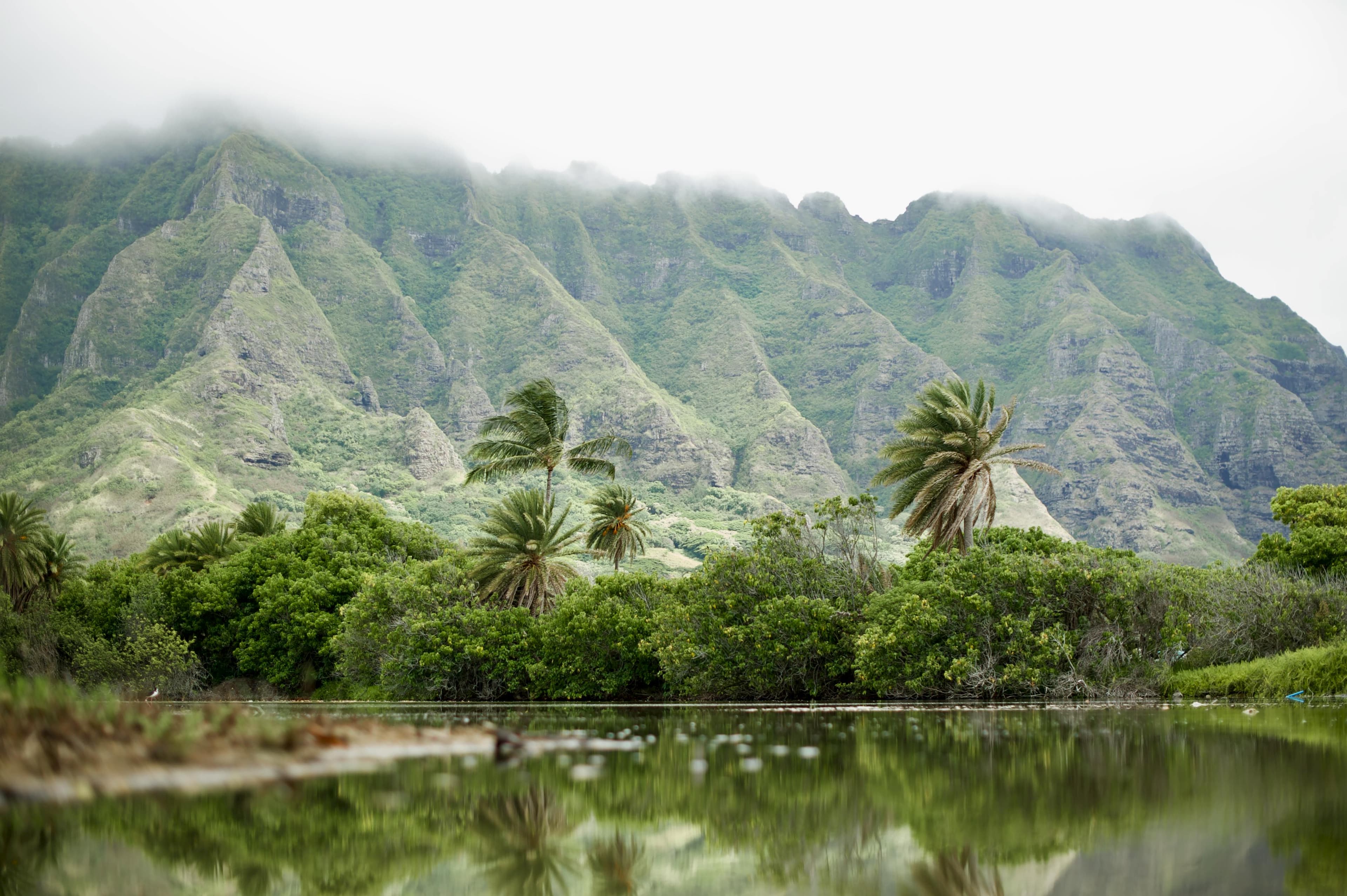
Hawaii does not have normal soil. The islands are built from cooled lava flows, and the geology alternates between rough, jagged A'a rock and smooth Pahoehoe lava. In many locations, there is no deep soil layer at all. You are building directly on or immediately above weathered volcanic rock.
The hidden hazard is below the surface. Ancient lava tube systems run through the subterranean landscape across the Big Island, Maui, and Oahu. These are hollow cavities left behind by flowing lava. They can open up without warning beneath a structural footprint. Standard geotechnical borings sometimes miss them.
On top of the geological challenges, the Big Island is classified under Seismic Category Level E, the highest risk designation, with design wind speeds of 110 mph. Homes have to be elevated on stepped foundations or tall stilts to negotiate the steep volcanic valleys. The combination of severe seismic loads, extreme wind, and the need to elevate the structure on a precarious slope makes the weight of the frame the most consequential decision in the build.
Then there is the salt. Hawaiian air carries oceanic salt continuously. Galvanized steel corrodes rapidly in this environment. The zinc coating degrades at cut edges, drill holes, and fastener points during construction. Once the zinc barrier is breached, the exposed carbon steel rusts aggressively. Technical experts specifically recommend against galvanized steel in harsh coastal environments.
Wood has its own problem here: termites. Hawaii's warm, humid climate supports some of the most aggressive termite populations in the US. All framing lumber must be factory-soaked in borate solutions, and the ground beneath slabs must be chemically treated before the concrete pour. These treatments off-gas VOCs into the living space for years. (We wrote about the full health impact of these treatments in our healthy home post.)
Aluminum solves all of these simultaneously. The natural oxide layer resists salt corrosion without any applied coating. There is nothing organic for termites to eat, so no borate treatments, no ground chemicals, no ongoing tenting. The weight is roughly a third of steel, so the elevated foundations on volcanic rock can be smaller. And the ductility handles the seismic loads at Category E without the brittle fracture risk of rigid steel connections.
The Smokies and Appalachia: ancient slopes with a mining legacy
The Appalachian Mountains are geologically ancient. The rock is heavily stratified shale, sandstone, and limestone that has been eroding for hundreds of millions of years. The combination of heavy rainfall, consistently humid climate, and weak geologic strata makes the region naturally prone to landslides.
But the bigger problem in much of Appalachia is human-made. Before the Surface Mine Control and Reclamation Act of 1977, surface coal mining operations could leave the landscape however they found it when they finished. The result is a patchwork of remnant highwalls, sheer mine benches, and radically altered drainage patterns across the region. Geospatial research shows that slopes below certain coal seams (like the Pittsburgh and Redstone seams) have significantly higher rates of deep-seated instability and complete slope failure.
Building in Western North Carolina and the Smoky Mountain corridor means that geotechnical engineers have to run global stability checks before permitting. They are not just evaluating whether the foundation can hold the house. They are evaluating whether the hillside itself can hold the house.
In this context, every pound of dead load matters. A lighter frame puts less stress on already-compromised slopes. It requires less excavation into unstable soil. And it can be delivered on smaller vehicles, which matters when your building site is at the end of a single-lane road with no turnaround.
The humidity is a separate issue. Wood framing in Appalachian climates absorbs moisture year-round. Rot is not a question of if, but when, and maintaining a hillside structure that is difficult to access for repairs makes rot especially expensive. Aluminum does not absorb moisture, does not rot, and does not need retreatment. Once it is up, it stays up.
Southern California: expansive clay, debris flows, and an insurance market in collapse
The hillside communities of LA, Malibu, Glendale, Pasadena, and Mount Washington sit on some of the most geotechnically difficult soil in the country. Lots regularly exceed 33% gradients. The soil is colluvium, loose and unconsolidated, interspersed with expansive clays that swell when wet and shrink when dry. This cyclical movement cracks foundations, warps frames, and shifts retaining walls.
Add wildfire, and the picture gets worse. After a fire strips vegetation from a slope, the first significant rain triggers debris flows. Montecito. Azusa. It keeps happening because the underlying geology does not change.
We covered the fire resistance, insurance crisis, and Chapter 7A code requirements in detail in our wildfire zone construction post. The short version for SoCal hillsides: non-combustible aluminum framing qualifies for insurance discounts of up to 16.4%, satisfies WUI material requirements, and puts less dead load on the expansive soil that is already trying to move your foundation.
Pacific Northwest: the Cascadia threat on a saturated slope
The Pacific Northwest has a problem that most of the country does not think about: the Cascadia Subduction Zone. When it ruptures (and geologists say it is overdue), the resulting earthquake will be the largest seismic event in the contiguous US in modern history.
This is relevant to hillside construction because the region's slopes are already saturated for much of the year. When soils are fully saturated, they lose most of their shear strength. A major earthquake hitting during the rainy season (which is most of the year) means seismic forces acting on slopes that are already on the edge of stability. The historical landslide record along Puget Sound confirms this is not theoretical.
Lighter frames generate lower seismic inertia forces. On a saturated slope, that is the difference between a structure that rides out the shaking and one that helps trigger the slide. Aluminum's ductility allows the frame to flex with the ground motion rather than cracking at rigid connection points.
The moisture also rots wood framing aggressively in this climate. A structure on a steep, wooded hillside in the PNW is fighting mold and decay from the day it is built. Aluminum is inorganic and does not absorb moisture, which eliminates the primary maintenance cost of hillside homes in the region.
Rocky Mountains: snow, ice, and bedrock
Building at altitude in the Rockies means dealing with extreme snow loads measured in tonnes, shallow bedrock that resists excavation, and freeze-thaw cycles that test every material in the structure.
Spring snowmelt can effectively double local river levels, raising the groundwater table and pushing massive sheets of water downhill against basement walls and retaining structures. Moisture that penetrates micro-cracks in concrete, wood, or rigid framing connections expands when it freezes, causing spalling, splitting, and fracture over repeated cycles. This is how mountain homes develop structural problems slowly over years that then fail suddenly.
Aluminum does not absorb water, so freeze-thaw cycles do not damage it the way they damage wood and concrete. And because the material is a third the weight of steel, the foundations can be designed for the site rather than over-engineered to carry a heavy frame on top of shallow, blast-resistant bedrock.
Different hazards, same physics
In Hawaii, the threat is volcanic instability, salt corrosion, and termites. In the Smokies, it is compromised slopes and humidity. In SoCal, expansive clay and wildfire. In the PNW, saturated soils and the Cascadia fault. In the Rockies, snow loads and freeze-thaw.
What they all share: on a steep lot, the weight of the building is the variable you can actually control. A lighter frame reduces foundation requirements, lowers seismic loads, simplifies delivery to remote sites, and gives the slope less reason to move. Non-combustible, non-organic, corrosion-resistant framing eliminates the maintenance costs that are hardest to manage on hillside properties because getting a repair crew to the site is expensive and sometimes impossible.
If you are building on a steep lot anywhere in the country, the framing material is the first decision that shapes every other cost in the project. The exact same constraints (steep grades, narrow access, salt air, seismic risk, wildfire exposure, no nearby crane) drive the structural choices behind remote luxury eco-resorts and high-end glamping cabins, which is why those developers are increasingly using flat-pack aluminum framing for the same reasons that hillside homeowners do.
Building on a steep lot?
Talk to Khurshid about how aluminum framing works with your specific site geology, slope, and access constraints.
Call Khurshid: (650) 450-1455Sources
- Foundation Systems Hawaii - Hawaii Geology and Foundation Construction
- Greg Putman Construction - How to Build on the Big Island of Hawaii
- Machine Matcher - Corrosion-Resistant Metal Profiles in Hawaii
- Read Metal Roofing - Sea Spray, Salt, and Metal Corrosion Resistance
- FEMA - Corrosion Protection for Metal Connectors in Coastal Areas
- GeoScienceWorld - Slope Instability Below Historic Mine Benches in West Virginia
- Sineath Construction - Site Prep for Mountain Homes in WNC
- Marshall Geo - Foundation Design for Hillside Construction
- PreventionWeb - Achieving Resiliency in the Pacific Northwest
- Washington State Ecology - Puget Sound Landslides Report
- HR Pacific - Building in the Rockies: Challenges of Elevation and Weather
- A-Line Automation - Why Aluminum Framing Helps Against Earthquakes
- AngleLock - Aluminum Frame Design vs Light Structural Steel
- CIH Design - Choosing Weather-Resistant Materials for Hawaii