Aluminum framing for marinas and dry stack boat storage: how corrosion-resistant construction changes the math for operators and acquisition investors
Wet slip permitting is frozen on the coasts. Dry stack is where capacity gets added. Galvanized steel within five miles of saltwater enters its first recoat cycle around year 13. Aluminum framing changes the build calendar, the year-15 CapEx liability, and the diligence math on a marina acquisition.
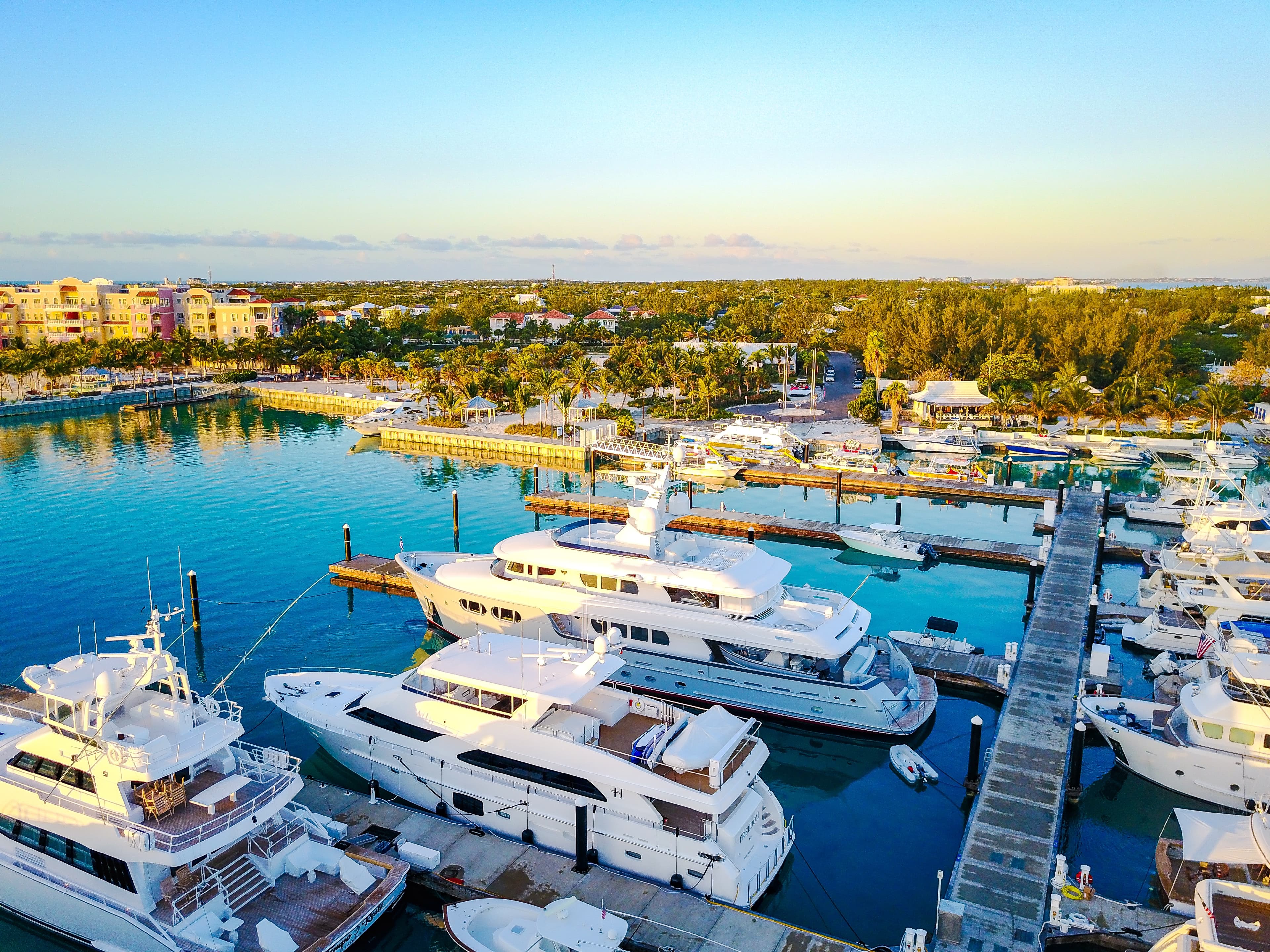
The wet slip ceiling and why dry stack is the only place new capacity actually goes
The boat storage business has a permitting problem that does not get talked about much outside of trade publications. The total US wet slip count has been roughly flat for two decades. New wet slips on coastal sites require Army Corps of Engineers Section 10 and Section 404 permits, plus state coastal management program review, and in most coastal states the practical answer to a new wet slip application is no. Florida, California, the Carolinas, the Gulf, the Northeast, all variations on the same theme. The slips that exist are the slips that exist.
So when boat sales run at 280,000 to 320,000 new powerboats per year with a fleet that is aging into replacement, and waitlists for wet slips in Miami, Fort Lauderdale, Newport Beach, Annapolis, and Long Island stretch from two years to seven, the only place capacity gets added is on land. Dry stack boat storage is where the entire industry is putting its growth capital. Suntex, Safe Harbor Marinas (now part of Sun Communities), Westrec, and Legendary Capital are all building, acquiring, or expanding dry stack inventory as fast as they can entitle and finance it.
The standard answer for a new dry stack building has been pre-engineered metal building (PEMB) construction, the same hot-dipped galvanized red-iron-and-Z-girt assembly that built the self-storage industry. I covered the broader issues with that default in our self-storage post. The marina version of the argument is sharper, because the buildings sit inside ISO 12944 C5-M marine atmosphere, the most aggressive non-immersion corrosion environment classified in the standard. Galvanized steel does not behave the same way 200 feet from saltwater as it does in a dry-climate suburb.
This post is for two audiences that usually read separately. Operators expanding dry stack capacity, who are pricing the build and the operating cost. And investors and platforms acquiring marina real estate, who are pricing the asset and what its CapEx liability looks like across a hold period. The framing decision lands on both pro formas. It just lands at different stages.
Why the saltwater line wrecks the standard PEMB economics
The corrosion environment at a coastal marina is not in the same category as a Texas warehouse or a Phoenix self-storage facility. ISO 12944 classifies atmospheric corrosivity from C1 (heated indoor) to C5 (industrial/marine). The C5-M designation, marine atmosphere with high salinity, is what applies to any structure within roughly five miles of saltwater, and the entire Atlantic, Gulf, and Pacific coastline of the United States falls into this band along with the Great Lakes shoreline.
Hot-dipped galvanized steel, the corrosion control system on a standard PEMB, relies on a sacrificial zinc coating that consumes itself over time. The standard PEMB primary structure is specified at G90 (0.90 ounces of zinc per square foot), with the wall panels at G60. ASTM B117 salt-fog testing projects G90 to last roughly 50 years in a C2 inland environment and 10 to 15 years in C5-M. Real-world data tracks the lab numbers. Coastal Florida, Gulf Texas, the Carolinas, coastal California, Hawaii, and Long Island all see PEMB structures entering exterior recoat windows at year 12 to 15. The 26-gauge wall panel skins fail faster than the primary frame. First perforation at fastener penetrations and panel laps shows up at year 5 to 12 in C5-M.
A coastal recoat project on an 80,000 square foot dry stack runs $400,000 to $750,000 depending on access, scaffold cost, whether the operator can keep boats stored during the work, and whether secondary repairs (column sleeving, panel replacement, fastener replacement) are folded in. Many cannot keep boats stored during the work. Tenant relocation costs are not in the recoat number; the operator absorbs those as concessions or revenue loss.
The same chemistry argument is why I wrote about vertical farming, where the ambient humidity inside a CEA facility creates a similar corrosion environment without the salt. The buildings look different. The corrosion problem is the same one. Aluminum forms a self-passivating oxide layer that does not consume itself. There is no recoat cycle. For a coastal dry stack, that single line item compounds across a 40-year asset life into real money.
The line items aluminum framing changes
Here is the line-item comparison for a 60,000 square foot, three-rack-high dry stack on a coastal site. That size is roughly the median for a new-build single-building dry stack in the 2024 to 2026 development pipeline. The numbers below are representative ranges, not firm pricing for any specific site.
| Cost line item (60,000 sq ft, 3-rack-high dry stack, coastal site) | PEMB / galvanized steel | Bolt-together aluminum |
|---|---|---|
| Frame kit lead time from purchase order | 14 to 26 weeks | 6 to 10 weeks |
| Field welding required | Yes, at column splices and rack interfaces | None |
| Specialty steel erector mobilization | Required | Optional. Standard framing crew with telehandler. |
| Erection labor market rate | $8 to $14 per sq ft (specialty steel erector) | $3 to $5 per sq ft (general framing crew) |
| Coastal recoat cycle (within 5 miles of saltwater) | 10 to 15 years to first recoat; recoats every 8 to 12 years after | None. Self-passivating oxide layer. |
| 26-gauge wall panel skin life (C5-M marine atmosphere) | 5 to 12 years to first perforation | 25 to 50 years (aluminum cladding) |
| Hurricane / high-wind zone compliance (ASCE 7-22, FBC HVHZ) | Yes, with engineered connections | Yes, with patented locking joint |
| Compatibility with marine forklift loading (Wiggins, Hoist, Taylor) | Yes | Yes, identical clear-span dimensions |
| Compatibility with standard dry stack rack systems | Yes | Yes, identical interface points |
| Non-combustible construction (Type II IBC) | Yes | Yes (ASTM E136) |
| Foundation dead-load propagation | Higher (heavier primary frame) | ~65% lighter primary frame; smaller footings |
The two lines that move the most year-1 money on the pro forma are kit lead time and erection labor. The lines that move the most exit-valuation money are the recoat cycle and the foundation dead load (which determines whether you can stack a fourth rack high without redoing the footings). I will spend most of the rest of this post on the lines that compound, and on the diligence questions a buyer should ask about an existing asset.
What dry stack actually costs in 2026, by configuration
The conversation gets more useful when you separate the four configurations operators actually build, because the framing decision lands differently on each.
Single-story dry stack (one to two boats high) runs $25 to $45 per square foot for the building package and erection. All-in development cost (slab, fire suppression, ventilation, utilities, fencing, gate, lighting) lands at $40 to $70 per square foot in most coastal markets. This is the easiest configuration to build and the segment where PEMB is hardest to dislodge if the site is more than five miles inland.
Multi-level dry stack (three to four boats high) is $55 to $85 per square foot for the building package, with all-in development at $80 to $140 per square foot. This is where every pound of dead load propagates down through the slab to the footings, and where aluminum's structural weight reduction at equivalent capacity (AngleLock structural comparison) shows up as smaller foundations, thinner slabs, and shorter foundation schedules. It is also where the corrosion exposure doubles, because you have more steel surface area and more interior condensation paths.
Covered wet slip canopy is $35 to $65 per square foot depending on truss span and water-side foundation requirements. Marine pile foundations dominate the cost on the wet side regardless of frame material; the frame itself is a smaller share of the project than on dry stack. The corrosion case for aluminum is the strongest of any configuration here, because the structure is suspended directly over saltwater and gets brine spray on every gusty day.
Forklift building / yard service shed (the high-clear-height structure that houses the marine forklift fleet, fueling, and maintenance bays) is $45 to $75 per square foot. Often skipped in early-stage pro formas and added late, with cost overruns. Should be priced upfront on a coastal site.
The hurricane and high-wind problem aluminum handles cleanly
A coastal dry stack is a Risk Category III structure under the IBC and has to meet ASCE 7-22 wind loading for the site. Florida coastal counties run 150 to 180 mph design wind speeds; Miami-Dade and Broward HVHZ (High Velocity Hurricane Zone) under the Florida Building Code requires testing well above ASCE base. Texas Gulf, Carolinas Outer Banks, Louisiana, and parts of New York metro all see 140 to 170 mph design speeds depending on exposure category and risk classification.
A PEMB engineered for HVHZ compliance is not a problem for the structure. It is a problem for the connections, the fastener spacing, the door-rated-opening assemblies, and the schedule, because every additional engineered weld inspection adds days. Aluminum's strength-to-weight ratio plus engineered connections delivers wind ratings cleanly when the connection geometry has been tested. The Core X Frame patented locking joint has been engineered for high-wind compliance and removes the field-weld inspection bottleneck that adds two to four weeks to a PEMB hurricane-zone schedule.
The other half of the hurricane equation is the boats themselves. A four-rack-high dry stack with 280 boats inside is not just a structural question; it is a $25M to $80M asset inventory question for the operator. Insurance underwriters increasingly want to see hardened, non-corroding structures with documented wind ratings before they will write the policy without exclusions. New aluminum builds in HVHZ jurisdictions have started to price into a different insurance bracket than aging galvanized PEMB. That delta is small in any one year and large across a hold period.
Forklift loads and clear span, what your structural engineer cares about
Marine forklifts are not warehouse forklifts. The operating boat-handling fleet at a typical coastal dry stack uses Wiggins Marina Bull, Hoist liftruck, or Taylor X-series machines with capacities from 25,000 to 45,000 pounds. They move boats from 4,000 pounds (a wet-stored center console) to 16,000 pounds (a 35-foot express cruiser). Working aisles need 25 to 35 feet of clear width and the rack vertical clearance is 12 to 15 feet per level. Floor loading runs 250 to 400 psf live with concentrated point loads under the forklift wheels.
The structural conversation is about clear span without a column in the operating aisle, slab capacity under the wheel loads, and connection geometry that does not interfere with rack mounting points. Aluminum primary framing handles the clear span at the same dimensions as steel, because the structural design is governed by deflection and connection capacity, not by alloy. The patented locking joint connection geometry has been designed to stay inside the column footprint, which keeps the rack interface clean. Standard rack systems including Steele Solutions, Bishamon, and Frazier integrate at the same anchor points as on a steel building.
What the structural engineer notices is the foundation. A 60,000 square foot four-rack-high aluminum dry stack puts roughly 100,000 to 130,000 pounds of primary frame on the slab. The PEMB equivalent is 280,000 to 360,000 pounds. That is about 200,000 pounds of dead load that does not need to propagate to the footings. In a soft-soil coastal site, where pile or auger-cast foundations dominate the budget, that weight reduction often determines whether the site can support a fourth rack at all.
Time from purchase order to first paid stall (60,000 sq ft, 3-rack-high coastal dry stack)
The schedule compression matters more in dry stack than in self-storage, because boat slip waitlists are a year-round funnel and not a seasonal one. Every month a new dry stack is not open is a month the waitlist gets longer somewhere else. Operators with multiple sites in a region (most of the consolidators) move waitlist tenants from a full property to the new one as soon as it opens. Eight months earlier on the shell is eight months of revenue and eight months of competitive moat against the operator across the channel.
The marina real estate underwriting case (this is the section for buyers)
Marina cap rates have widened from compressed 2021 levels of around 5.5 to 6.5% to roughly 6.5 to 8.5% in 2026, depending on geography, asset quality, and the mix of dry stack to wet slip to ancillary services. Marcus & Millichap and other commercial brokers tracking the segment publish quarterly reports; the consolidators (Safe Harbor under Sun Communities, Suntex, Westrec, Legendary) are still acquiring at sub-market caps for trophy assets.
The blind spot most acquisition diligence teams have on a coastal marina is the deferred maintenance liability inside the dry stack and any covered slip canopies. A 20-year-old PEMB dry stack is approaching or in its second recoat cycle, with structural sleeving and column replacements increasingly common. The Property Condition Assessment ordered for closing usually flags "recoat needed" as a line item without modeling the actual cost progression across the hold period, which compounds. First recoat at year 13: $400K to $750K. Second recoat at year 22 to 25, with secondary repairs: $700K to $1.4M. Year 30+ structural replacement of the worst columns: another $500K to $2M.
On a 7.5% cap rate, a recurring maintenance liability of roughly $80,000 per year (the annualized equivalent of the recoat-and-repair stream above on an 80,000 sq ft dry stack) translates to approximately $1.07M of valuation impact. That is the difference between a clean and an aging coastal steel structure, before you account for tenant disruption during the work, insurance treatment, and the optionality cost of being unable to expand vertically without replacing the whole thing first.
What this means in practice for a marina acquisition diligence team:
- Aluminum dry stack structures should command a CapEx-adjusted premium relative to comparable galvanized PEMB structures of the same age, and that premium should show up in the underwriting model rather than being competed away.
- Coastal PEMB structures past year 10 should be priced with a recoat reserve in the trailing diligence model, not the forward one.
- For acquisition platforms with active value-add programs (Safe Harbor, Suntex, and the institutional buyers behind them), the question is not just "what does this asset cost today" but "can we add a fourth rack level on the existing footings to expand capacity without a new entitlement." Lighter framing makes that vertical expansion option real. Heavier framing usually closes it.
- For new-build acquisitions or merchant-build-to-sell developers, the framing material on the dry stack and any covered canopies is increasingly something institutional capital will price.
The conversion math: replacing aging steel dry stack vs recoating one more time
For an operator running a coastal PEMB dry stack approaching its second recoat cycle, the decision is not always recoat. Sometimes it is rebuild.
The case for rebuild gets stronger when three things line up. The recoat cost plus secondary structural repairs is approaching 30 to 50% of replacement cost. The existing structure is at three racks high and the market rent supports four. And the operator has phasing flexibility, so the rebuild can happen one bay at a time without taking the entire asset offline. In coastal markets with two-year or longer waitlists, the operator can usually relocate boats inside its own portfolio during the work without losing revenue, especially if the consolidator parent has nearby capacity.
The bolt-together aluminum rebuild is well-suited to phased reconstruction, because the kit is modular and the standard erection crew is the operator's GC. The fourth rack level adds 25 to 35% of inventory at marginal cost compared to a new ground-up build. On the right asset, the rebuild-and-add-a-level path produces a higher unlevered yield on the incremental capital than acquiring a new site and entitling it from scratch.
The kit, who erects it, what stays compatible
What ships from Core X Frame for a marina dry stack is bolt-together aluminum profiles cut to length, with the patented locking joint at the structural connections. Bolts go through the locked geometry. No field welding is required for the load-bearing joints, no certified welders are required to put the shell up, and no separate structural weld inspection budget is required for HVHZ jurisdictions.
Compatibility with the rest of the dry stack ecosystem was the question I expected from every operator. Standard rack systems (Steele Solutions, Bishamon, Frazier) bolt to the aluminum primary frame at the same anchor points as on steel. The marine forklift fleet does not change. Fire suppression integrates the same way. The maintenance bays, the fueling, the wash-down, all standard. The shell is a different system underneath the same finish, exactly the way I described it for the self-storage shell.
Erection: a general framing crew with a telehandler can stand the shell up. No specialty steel erector mobilization, no certified welders, no separate weld inspection. Most marina operators with a recurring development program already have a GC they trust; that GC's existing crews can do the work. I walked through the same self-erect logic for commercial shops in the contractor warehouse post. The dry stack version of the argument is the same, with the addition of the C5-M atmosphere outside.
Who this is for
Bolt-together aluminum framing for marinas and dry stack is the right answer for:
- Coastal dry stack operators expanding capacity in Florida, Gulf, Carolinas, coastal California, Hawaii, and the Northeast, where C5-M atmosphere makes the recoat cycle the largest non-tax line on the year-15 P&L. The Hawaii corrosion environment is in a category of its own, and the Hawaiian marina market is uniquely punished by galvanized steel.
- Hurricane-zone operators in HVHZ jurisdictions where the engineered weld inspection adds material schedule and cost.
- Marina REITs and acquisition platforms (Safe Harbor / Sun Communities, Suntex, Westrec, Legendary, family offices, infrastructure funds) acquiring assets where the value-add program depends on vertical expansion of existing dry stack on existing footings.
- Operators with year-15+ PEMB dry stacks approaching the recoat-or-rebuild decision, especially if the rebuild can add a fourth rack level on existing foundations.
- Boatel and "marina-as-resort" developers building integrated dry stack plus hospitality on the same site, where speed-to-open matters and the architectural language has to match a luxury property.
- Merchant-build-to-sell developers underwriting an exit to institutional capital, where the framing material on the dry stack is increasingly priced into the bid.
It is probably not the right answer for an inland lake marina more than five miles from any saltwater, with a one-rack-high dry stack and a ten-year hold horizon. The C5-M math does not apply, the foundation savings do not stack, and PEMB is fine. Honest answers in both directions.
Diligence checklist for marina real estate buyers
If I were running diligence on a coastal marina acquisition today, these are the questions I would want answered before signing the LOI, not after:
- What year was each dry stack and covered canopy built? What is the documented recoat history? What is the projected next-recoat cost in current dollars, and is it baked into the trailing five-year CapEx schedule the seller showed you?
- What is the corrosivity classification at the site under ISO 12944? Is it C5-M, and if so, has the seller's PCA modeled the 30-year structural replacement reserve correctly?
- What is the current rack height, and what would it take structurally to add another level? Specifically, what are the existing footing capacities, and would a vertical expansion require new foundations or just new framing?
- What is the ASCE 7-22 design wind speed at the site, the IBC Risk Category, and (if applicable) FBC HVHZ status of each structure? Is the engineering documentation on file, and does it match the as-built?
- What is the marine forklift fleet composition, the rack system manufacturer and age, and does the existing structural system support the next-generation forklift the operator will need to add in the next five years?
- Insurance: what does the carrier's underwriting say about the framing condition? Are there exclusions for "preexisting corrosion" damage, and how does the renewal premium compare to a peer property with newer or non-corroding structure?
- Capacity expansion entitlements: are there existing site approvals for additional dry stack inventory, and if so, what is the remaining permit life?
- For value-add buyers: what would a phased rebuild of the worst dry stack look like, and what is the unlevered yield on the incremental capital relative to acquiring a comparable new asset?
A coastal marina is a long-duration real asset with two structural systems usually in different stages of their corrosion clock. The asking price reflects the income statement. The work of diligence is figuring out where the balance sheet is going.
Pricing a new dry stack, underwriting a coastal marina acquisition, or running the numbers on a rebuild-and-add-a-level expansion?
Khurshid will walk through the structural and CapEx math without a deck. If you want a straight conversation about a Core X Frame shell your GC can erect, or a diligence-stage read on framing risk in an acquisition, give him a call.
Call Khurshid: (650) 450-1455Sources
- ISO 12944 - Corrosion Protection of Steel Structures by Protective Paint Systems
- ASTM B117 - Standard Practice for Operating Salt Spray (Fog) Apparatus
- National Marine Manufacturers Association - U.S. Recreational Boating Statistics
- Safe Harbor Marinas - Portfolio Overview
- Sun Communities - Annual Report and Marina Segment Disclosure
- Suntex Marinas - Portfolio and Acquisition Activity
- U.S. Army Corps of Engineers - Section 10 and Section 404 Permitting
- Florida Building Code - High Velocity Hurricane Zone Provisions
- ASCE 7-22 - Minimum Design Loads and Associated Criteria for Buildings and Other Structures
- AngleLock - Aluminum Frame Design vs Light Structural Steel
- Inner Loop Construction - PEMB Lead Times and Specifications
- S&P Global Commodity Insights - Hot-Rolled Steel Coil Pricing
- ITIF - Construction Industry 439,000-Worker Shortage (Jan 2026)
- EPA - Aluminum Material-Specific Recycling Data