Luxury pop-up pavilions that build in days and tour for years: the case for bolt-together aluminum framing
SXSW and Art Basel give you hours to go live. The International Building Code treats anything under 180 days as a temporary structure that still needs full plan review. Premium brands want glass walls that look architectural, not like truss-and-banner event scaffolding. This is the gap bolt-together aluminum framing fills.
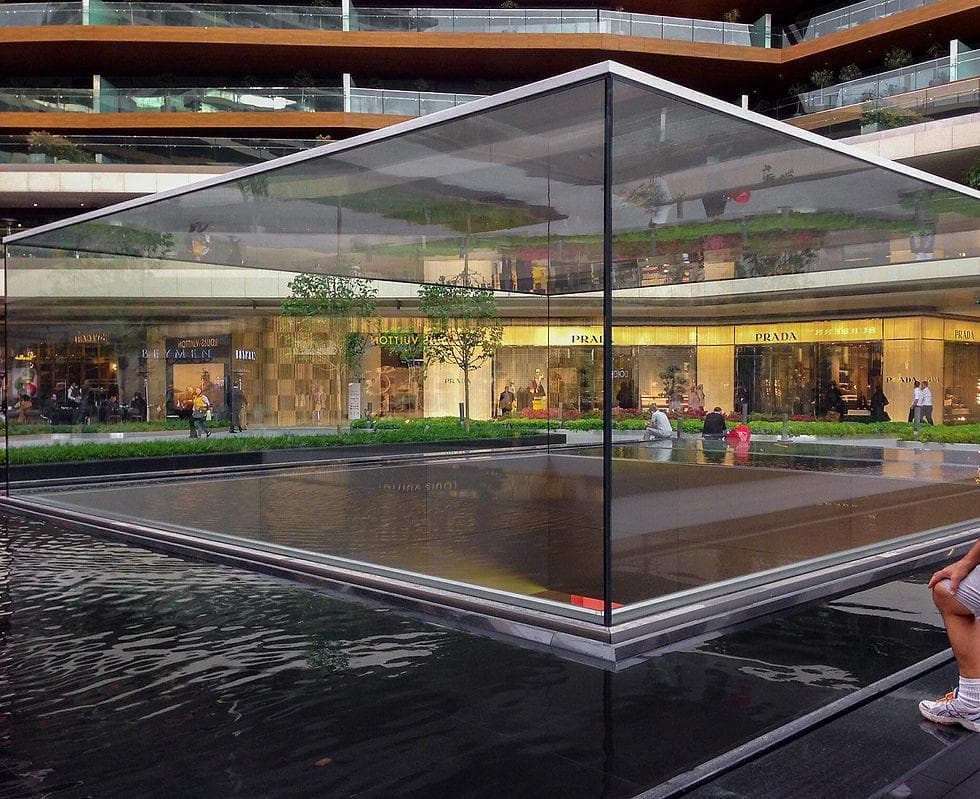
Brand pop-ups are temporary buildings, not set dressing
There is a quiet shift happening in experiential retail. For a long time, pop-ups were treated as events with a storefront attached. Fabric walls, truss rigging, printed vinyl, a couple of pendants. You built it in 36 hours, ran it for 72, and threw it in a dumpster.
That is not what luxury brands want anymore. The aesthetic has shifted toward "museum-grade" presence. Clean lines, large glass panels, a footprint that reads as architecture rather than stage. The production timeline has not shifted with it. The brand still wants to go live on a Friday morning of a festival, not six months later.
What this actually means on the ground is that pop-ups have become temporary buildings in public contexts, governed by the same life-safety rules as any other occupied structure. The 2024 International Building Code defines a temporary structure as one in place for less than 180 days and still requires permits, construction documents, and conformity with structural, egress, fire safety, and accessibility requirements. That is a big change from how most production houses still think about builds.
And in case the inspector is not persuasive enough, the permit artifacts are very specific. The temporary-structures application used by the City of Austin requires a site and floor plan showing dimensions, walls, exits, and exit widths, asks whether the structure is multi-story, obstructs exits, or affects sprinklers, and checks for NFPA 701 compliance on any decorative fabrics. None of that is optional because the activation is only there for a weekend.
The two real constraints: time to open, and permit match
If you look at published event guidance from entities like SXSW or art fair exhibitor packets from organizations like Art Basel, the two things that drive everything else are the go-live deadline and the match between the built condition and the drawings the reviewer approved. SXSW's 2024 venue activation guidance describes activations that interact with tens of thousands of attendees per day and explicitly makes clients responsible for tent permits, food permits, and alcohol permits, with non-negotiable submission cutoffs.
Art Basel exhibitor packets are equally strict on move-in and move-out windows, even for booth-scale installations. The production reality is that your build exists inside a tightly managed schedule that rewards systems with predictable, repeatable assembly. If your pavilion depends on a field welder showing up on a specific morning, you are one flat tire away from not opening.
The match-to-drawings problem is more subtle. Inspectors do not care how beautiful the concept was. They care whether the thing in front of them matches the site plan they approved. Stick-built pavilions tend to drift during field installation because carpenters improvise when something does not quite fit. Factory-cut, pre-drilled aluminum components cannot drift. They only assemble one way.
| Production constraint for a luxury pop-up | Typical stick-built or scenic stage build | Bolt-together aluminum pavilion |
|---|---|---|
| Go-live deadline (hours, not weeks) | Field cuts, wet paint, heavy stage rigging. Misses first-morning open regularly. | Flat-pack, pre-drilled, bolted. Small crew can hit a morning deadline. |
| Permit review and site plan match | Built condition drifts from approved drawings when crews improvise on site. | Factory-cut components force the as-built to match the reviewed drawings. |
| Large glass walls (premium look) | Scenic substitutes or small vision panels. Rarely safety-glazed. | Direct attachment for full-height safety glazing to ANSI Z97.1 / 16 CFR 1201. |
| Hot work restrictions on event sites | Welding and grinding require fire watches and hot-work permits. | Zero welding. No sparks, no hot-work permit. |
| Touring the same pavilion for multiple activations | Screws and nails chew up the wood each cycle. Material loss every teardown. | Reversible bolted connections. Disassemble without degrading the parts. |
| Sustainability scorecards and ESG reporting | One-off scenic builds generate ~5.9 kg/m² of dismantling waste. | Modular reusable stands generate ~1.7 kg/m² of dismantling waste. |
Why premium pop-ups mean glass, and why glass drives structure
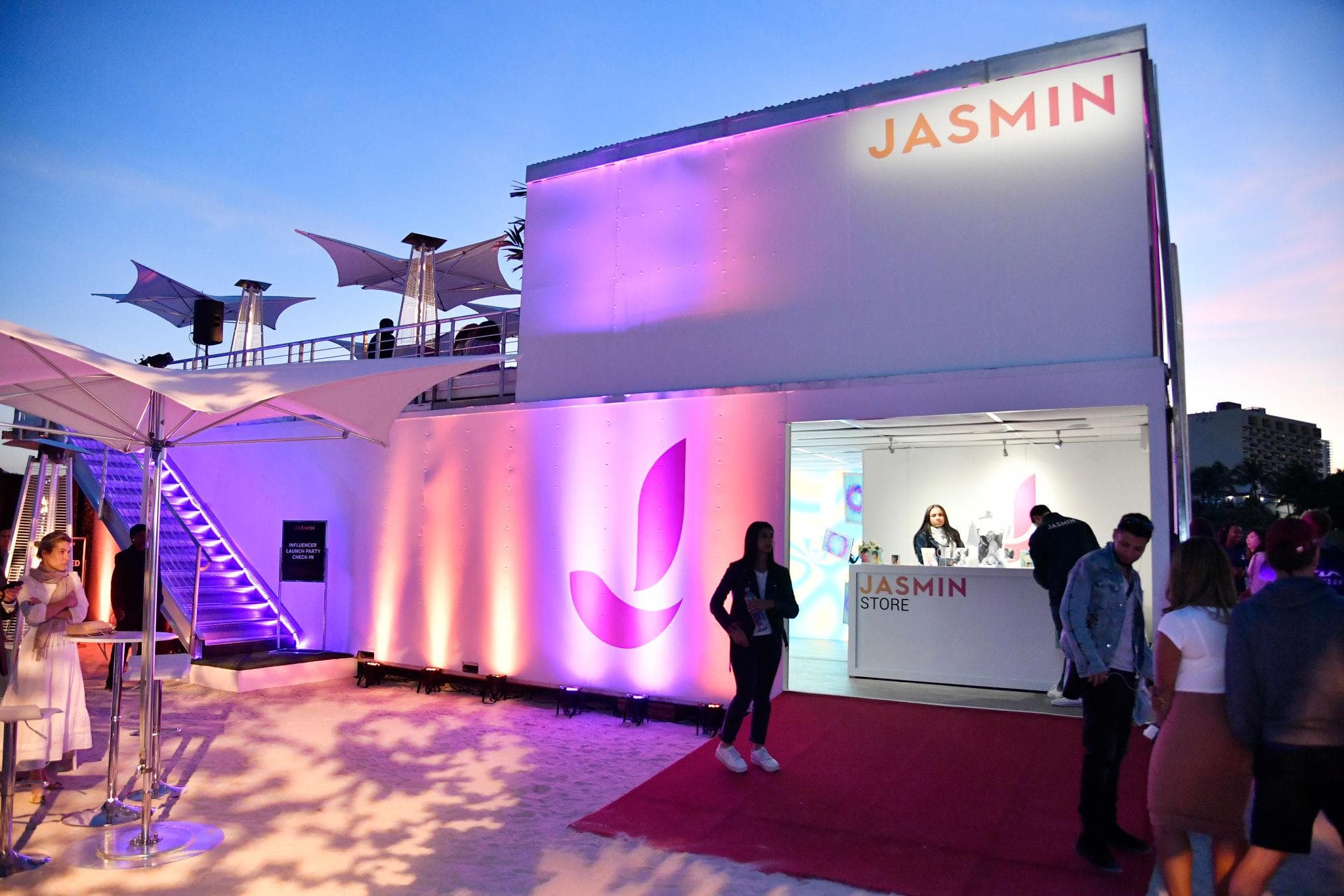
Here is the practical engineering problem with the "museum grade" brief. Luxury brands want floor-to-ceiling glass walls because that is the aesthetic that signals architecture instead of event scaffolding. But glass is dense. Guardian Glass puts the density of architectural glass at around 2,500 kg/m³. That works out to roughly 30 kg per square meter for a 12 mm thick laminated wall, before you account for framing, hardware, or secondary lites. A full wall of premium glass weighs a lot more than a fabric panel, and the structure has to actually hold it up.
There is also the safety angle. Architectural glazing is regulated. In the US, 16 CFR Part 1201 covers laminated and tempered glazing materials, and ANSI Z97.1 specifies test methods and performance standards for safety glazing in buildings. If you want floor-to-ceiling glass in a public pavilion, you are using building-grade assemblies, not lightweight scenic substitutes.
Bolt-together aluminum framing handles this well because the system is engineered to accept direct attachment of glass, composite, or wood cladding panels. I wrote about the same structural principle in the context of residential design in no load-bearing walls: when the load is in the exterior frame, the rest of the envelope becomes a design choice.
No welding, which solves more problems than you think
Event sites are hot-work hostile. They are full of combustible fabrics, polyester banners, miles of power cable, and crowds. Welding introduces sparks, slag, toxic fumes, and OSHA hot-work permit requirements, which most event venues simply will not grant. Scenic houses work around this by pre-welding in the shop, but then they have to ship a rigid framework that is much harder to transport than flat-packed components.
Bolt-together aluminum sidesteps the whole category. There is no welding, no sparks, no hot-work permit, no fire watch. The components show up flat-packed, a small crew assembles them with hex keys and drills, and the pavilion goes weather-tight in days.
The labor math is also easier. The ITIF reported in January 2026 that the construction industry is short about 439,000 workers, with certified welders being among the hardest trades to book. When every data center project in the country is competing for welders (I wrote about that shortage in our data center framing post), a scenic production shop trying to hire short-term welders for a two-week pop-up gig is going to lose. The bolted approach uses general labor that any production crew can already supply.
The reuse math is where the ESG story actually lives
I think the most under-discussed part of this whole category is the waste generation. Trade fair waste has been studied in real numbers. A Waste Management journal study of covered trade fairs found that the assembly and dismantling stages of temporary structures are where the largest waste flows happen, and that fairs dominated by non-reusable stands generated roughly 5.9 kg/m² of waste at dismantling, versus about 1.7 kg/m² for fairs dominated by modular reusable stands.
That is more than a 3x difference. For a brand running ten activations per year at 500 square meters each, the cumulative waste delta between a one-off scenic build and a reusable modular system is enormous. If you are reporting Scope 3 emissions or any kind of circular economy KPI, the production model is the number that moves the scorecard, not the recycled content of the furniture inside.
Trade fair waste generation at dismantling (kg per square meter)
The guidance literature lines up with the data. The UK Green Building Council Design for Disassembly guide specifically recommends reversible connections (screws and bolts) over permanent ones, precisely so components can come apart without degrading the material. Ellen MacArthur Foundation material on circular construction frames deconstruction as disassembly to recover the maximum amount of reusable material. Bolt-together is literally the reference pattern for this.
Aluminum itself strengthens the sustainability case. The EPA, the International Aluminium Institute, and the Aluminum Association all use the same figure: recycling aluminum uses 95% less energy than producing it from raw bauxite. Even if a pavilion does eventually get retired, the metal goes back into the recycling stream with effectively no degradation.
Durability matters when a pavilion has to tour
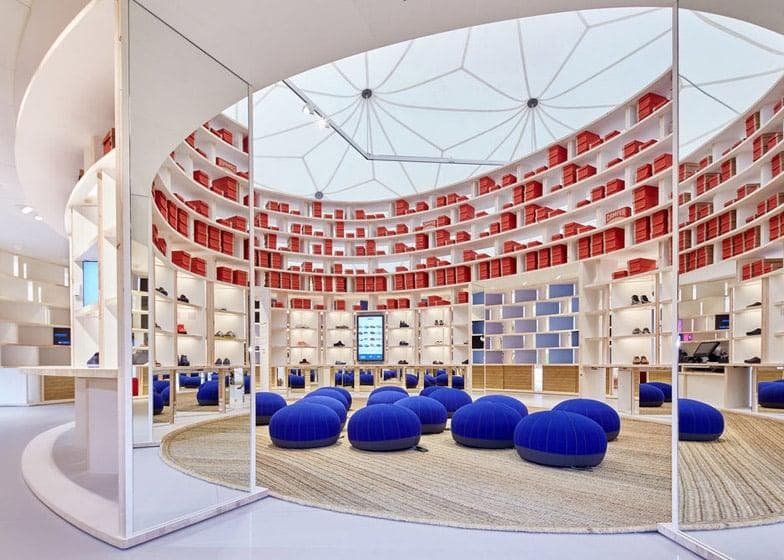
Most of the value in a modular pavilion shows up in the second and third deployments. The first build amortizes the tooling and engineering, and every subsequent activation is cheap by comparison. That math only works if the pavilion actually survives being disassembled, shipped, and rebuilt multiple times.
Wood tends to chew up at the joints. Screws back out, nails deform fibers, and by the third teardown you are replacing members. Welded steel cannot come apart cleanly at all. Aluminum with precision bolted connections survives repeated assembly cycles without degrading the interface, partly because the oxide film on the metal is self-healing. Scratches and minor dings during transport seal themselves almost immediately.
For a brand running quarterly activations across different cities, that durability is the difference between amortizing a capital build over three years and rebuilding a scenic set every season.
The "spec mindset" checklist I would use before signing a production estimate
If I were reviewing a proposed luxury pop-up pavilion as a client, I would want clear answers on five specific items before approving the build:
- Structural engineer sign-off, including wind loads appropriate to the venue and a real calculation for the glazing weight, not an "it will be fine."
- Anchorage and foundation strategy. Ballast, screw piles, or plated tie-downs, with a documented load path to ground.
- Egress and ADA paths shown on the site plan, with exit widths called out, matching the submitted permit drawings.
- Glazing safety standard compliance (ANSI Z97.1 / 16 CFR 1201) documented on a submittal, not verbally promised.
- A maintenance and inspection plan for every subsequent deployment, so the pavilion does not degrade invisibly between tours.
None of this makes the pavilion slower to build. If anything, the documentation forces a cleaner production process, which is exactly what bolt-together aluminum was designed for.
Where this makes sense, and where it does not
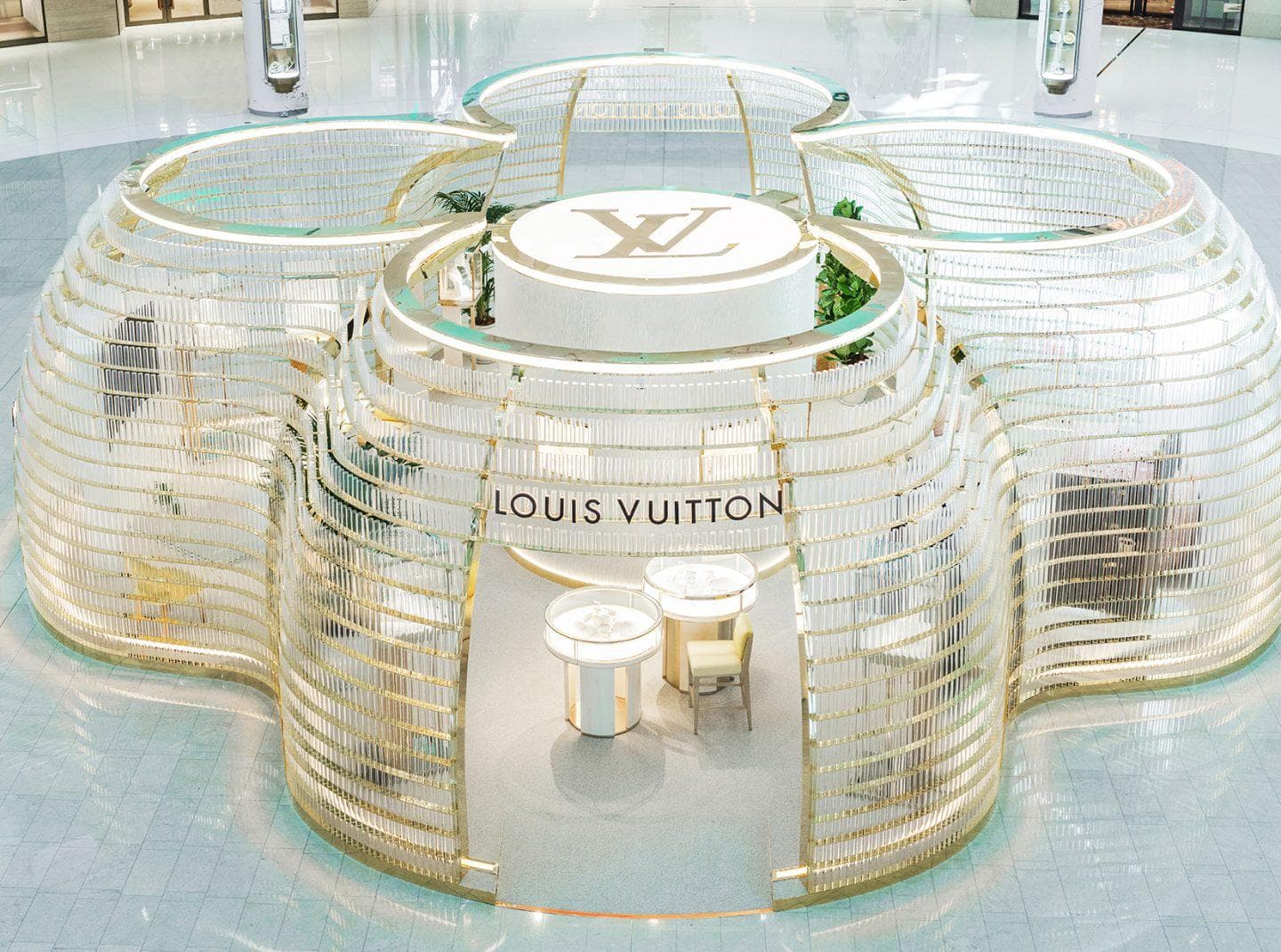
I want to be honest about where bolt-together aluminum framing is the wrong answer. If you are building a tiny three-day pop-up with a $15K budget that will never be reused, a scenic truss build is still probably cheaper on pass one. The math tips when the pavilion is expected to tour, or when the brand wants a genuinely architectural aesthetic with large glazing, or when the venue has strict permit requirements and no tolerance for improvised field conditions. The same reusability and rapid-redeploy logic, by the way, is exactly why federal agencies are now using bolt-together aluminum for FEMA emergency shelter and BRIC-funded resilient infrastructure. The market is different, the deployment model is identical.
For a brand running four to twelve activations per year at premium venues, the aluminum approach compounds across deployments. The first build looks like a capital line item. The fifth deployment looks like marketing infrastructure that just shows up when you need it.
Building a luxury pop-up or touring pavilion concept?
Khurshid works with production houses and brands on structural kits that build in days and tour for years. Call for a conversation.
Call Khurshid: (650) 450-1455Sources
- ICC - 2024 International Building Code, Chapter 31 Special Construction
- SXSW - Exhibitor and Activation Information
- City of Austin - Temporary Structures Development Services
- Guardian Glass - Density and Technical Documentation
- CPSC - 16 CFR Part 1201 Architectural Glazing Safety Standard
- ANSI Z97.1 - Safety Glazing Performance Standard
- Waste Management Journal - Trade Fair Waste Generation Study
- UK Green Building Council - Design for Disassembly
- Ellen MacArthur Foundation - Circular Economy Principles
- ITIF - Construction Industry 439,000-Worker Shortage (Jan 2026)
- EPA - Aluminum Recycling Data