Aluminum framing for indoor pickleball facilities: how schedule compression decides who owns a regional market
There are 25-plus operator brands racing to plant flags in every US metro. PEMB shells run 16 to 26 weeks of lead time before erection even starts. In a category where the first facility to open inherits the waitlist and the second one inherits the leftovers, the framing material is what decides who opens first.
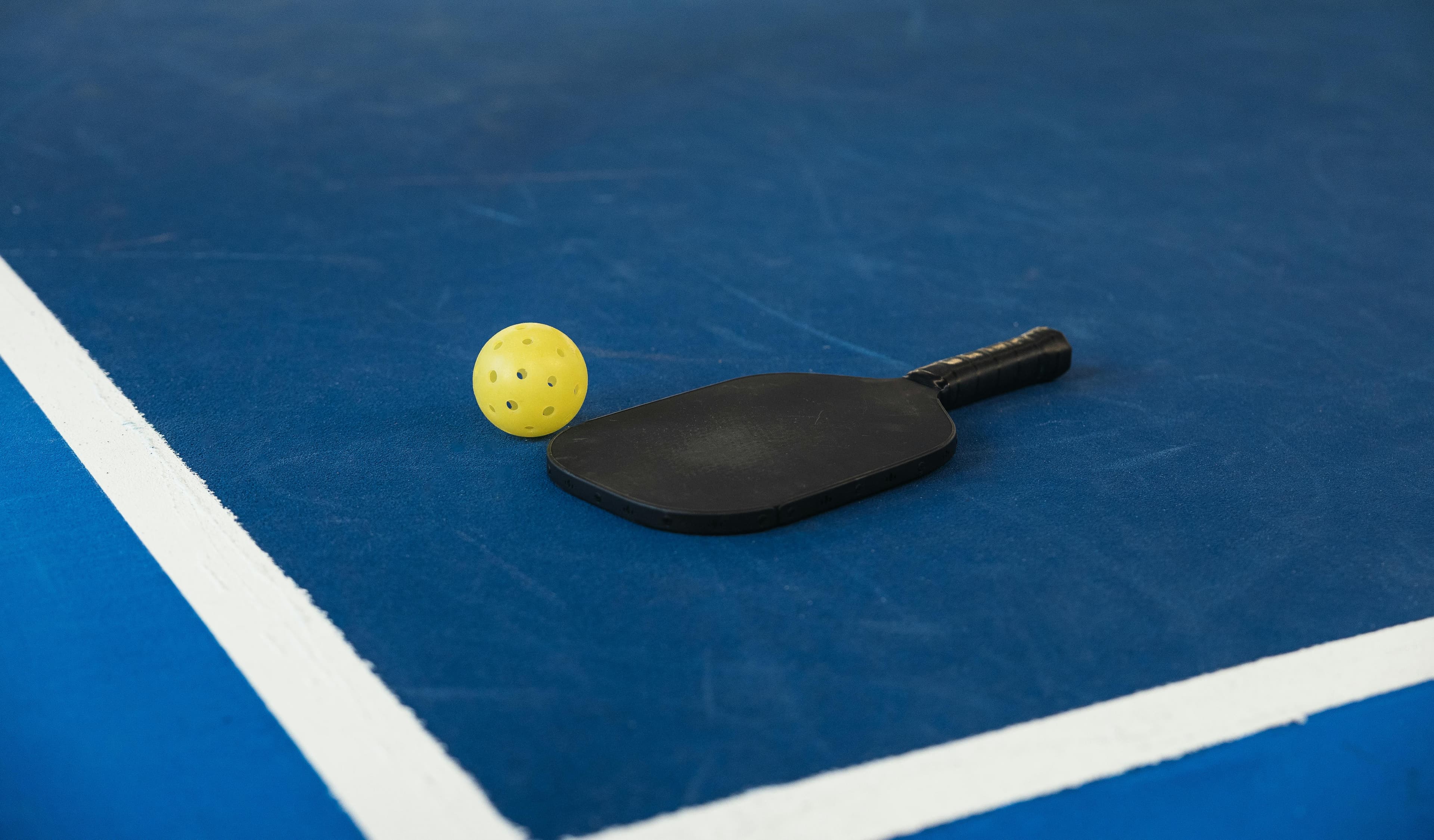
The land grab and why it ends in about three years
Pickleball is past the novelty phase. The Sports & Fitness Industry Association Topline Report puts US participation around 19.8 million in 2024, growing 30 to 50% year over year for four straight years. The sport is now mainstream enough that USA Pickleball has issued formal facility standards and the major operators are running franchise development pipelines with the cadence of a fast-casual restaurant rollout.
The list of operator brands chasing the same metros is now long. Life Time has rolled pickleball into its racquet club program. Chicken N Pickle, The Picklr, Ace Pickleball Club, Camp Pickle, Pickletopia, Pickleball Kingdom, Big League Pickle, Pure Pickleball, and another fifteen smaller operators are all building, franchising, or acquiring inventory as fast as they can permit and finance it. Several have institutional capital behind them. A few are publicly tracked.
What is less obvious from the outside is that the land grab will be over in roughly three years. The pattern that played out in self-storage in the 1990s, in trampoline parks in the 2010s, and in boutique fitness in the late 2010s is playing out faster in pickleball because the operator pipeline is already mature when the player base is still expanding. By 2028 the first round of consolidation will be done. The metros will have winners, and the operators that did not open in time will be acquired, shuttered, or stuck competing against a brand with three locations and a regional waitlist.
This post is for the operators trying to be the winner in a metro, and for the capital partners (private equity, family offices, infrastructure funds) writing checks against the asset class. The framing decision lands on both, and it lands harder than most operators realize the first time they price a shell.
Why first-to-open compounds in pickleball more than most retail
Court time at an indoor pickleball facility is a perishable inventory product. A booked court at 7 PM on a Tuesday cannot be re-sold; if the local member did not book it, the revenue is gone for the day. That is true of every court-sports business and has been true since indoor tennis. What is new in pickleball is how sticky league play has become at the facility that hosted the first season.
Wednesday night beginner-intermediate leagues, Sunday morning women's 3.5 ladders, the after-work mixed-doubles round robin. Once these form at Facility A, they do not migrate to Facility B when Facility B opens six months later. The captains stay. The text chains stay. The court bookings stay. The membership dues stay. Operators in mature metros have started reporting that 18 months after their first facility opens, league revenue is 35 to 50% of total revenue and 80% of that league revenue renews automatically.
The compounding effect is mechanical. The first facility in a metro captures the league formers, who are also the social hubs, who recruit other players, who fill the waitlist, which justifies expansion. The second facility in the metro inherits whoever the first one did not capture, which in most metros is a smaller and less coordinated pool. The third facility usually opens into a market where the first two have already locked up the daytime senior leagues, the corporate league night, and the youth program. None of this is irrecoverable, but it is hard to recover, and it shows up on the pro forma as utilization that ramps slower than projected.
That is why a four to six month earlier opening matters more in this category than it does in self-storage or retail or even fitness. Self-storage tenants will lease wherever has the right unit size at the right price. Pickleball players do not behave that way once they are in a league.
What 16 to 26 weeks of PEMB lead time actually costs
The standard answer for a new indoor court facility shell is pre-engineered metal building construction. PEMB works on the structural side. It also runs 16 to 26 weeks of frame kit lead time from purchase order, on top of the design, permit, and foundation timeline. Steel mill capacity for the heavier sections most pickleball facilities need (taller eave, longer clear span for multi-court layouts) is tight in 2026, and the data center build-out is competing for the same mill slots. Inner Loop Construction's PEMB lead time tracking has held in the same band through the last two reporting cycles.
On top of the kit lead time, a steel erector with a certified welder has to be available the week the foundation is ready. The AGC 2024 Workforce Survey still puts the construction labor shortage at over 400,000 workers, with structural ironworkers among the hardest specialty crews to schedule. In primary metros (Dallas, Austin, Phoenix, Tampa, Nashville, Charlotte) the wait for a steel erector crew can add another four to eight weeks to the construction schedule by itself. I went through the broader version of this argument in the data center post; the pickleball version is the same physics on a smaller building.
Here is the line-item comparison for a 35,000 square foot, 10-court indoor pickleball facility, which is roughly the median for a new-build single-building facility in the 2024 to 2026 development pipeline. The numbers below are representative ranges, not firm pricing for any specific site.
| Cost line item (35,000 sq ft, 10-court indoor pickleball facility) | PEMB / red iron + welded splices | Bolt-together aluminum |
|---|---|---|
| Frame kit lead time from purchase order | 16 to 26 weeks | 6 to 10 weeks |
| Field welding required | Yes, at column splices and tall-eave knee joints | None |
| Specialty steel erector mobilization | Required | Optional. Standard framing crew with telehandler. |
| Erection labor market rate (10,000 sq ft shell) | $7 to $13 per sq ft | $3 to $5 per sq ft |
| Clear span at 22 ft eave (padel-ready) | Yes, with deeper trusses and heavier columns | Yes, at lower frame weight |
| Foundation dead load (primary frame) | Higher (heavier primary frame) | ~65% lighter; smaller footings, thinner slab edge |
| Phase 2 expansion (add 4 to 6 courts later) | Re-mobilize steel erector, re-engage welders, re-permit structural addition | Bolt-together bay extension by the operator's GC |
| Acoustic ceiling and wall panel attachment | Aftermarket clips and anchors | Native T-slot rail compatibility |
| Court line of sight (no interior columns) | Yes, with engineered primary frame | Yes, with patented locking joint |
| Non-combustible construction (Type II IBC) | Yes | Yes (ASTM E136) |
| Hurricane / high-wind zone compliance (ASCE 7-22) | Yes, with engineered connections | Yes, with patented locking joint |
The two lines that move the most schedule are the kit lead time and the erection labor. The line that moves the most option value over the asset's life is phase 2 expansion, because almost every successful facility wants to add courts within 24 months of opening and most operators do not budget for what a steel addition actually costs once the original GC has demobilized.
Time from LOI to first paid court hour (35,000 sq ft, 10-court indoor pickleball facility)
Five months earlier to door open in a category where leagues form in the first 90 days is the entire point of the post.
The big-box conversion vs ground-up question
A lot of operators look at conversion first. Former Toys R Us, Bed Bath & Beyond, Sports Authority, and Babies R Us boxes are sitting empty in second-ring suburban markets at $8 to $14 per square foot triple net, with existing slabs, parking, and utilities. On paper, conversion is faster and cheaper than ground-up.
In practice the conversion dies on the column grid more often than operators expect. A pickleball court is 20 by 44 feet of play surface, with USA Pickleball recommending an 8 to 10 foot perimeter run-back zone on every side and a 6 foot side buffer between adjacent courts. That puts the practical column-free bay at 30 to 36 feet wide minimum to fit a court with proper run-back. Most big-box retail was built on 40 by 40 or 50 by 50 column grids, which sounds workable until you try to fit two courts side by side in a single bay and lose four feet to a column running down the centerline of the side buffer.
The other recurring conversion problem is clear height. Pickleball needs 18 to 20 feet absolute minimum to the lowest obstruction (HVAC, sprinkler, light fixtures, structural). Operators that want to host televised events or tournaments want 22 feet so high lob shots are not constrained. Padel needs 30 feet clear. A typical converted big-box has 16 to 18 feet to the bar joists with HVAC and lighting dropping below that. Raising the roof on a converted big-box is structurally possible but expensive enough that it usually flips the math back toward ground-up.
The third issue is roof load. A pickleball facility wants acoustic ceiling baffles, additional lighting (4 to 8 fixtures per court), an upgraded HVAC system sized for the player heat load, and often suspended court divider netting. That is a non-trivial increase in roof dead load over what a retail box was engineered for. Some retrofits work, but the structural engineer's report is what decides.
When the conversion does not pencil, the operator is back to ground-up. That is where the lead-time and erection-labor delta between PEMB and bolt-together aluminum starts mattering. I covered the parallel argument for self-erect commercial shells in the contractor warehouse post; the pickleball case is the same logic applied to a higher-clear-height shell with stricter acoustic envelope requirements.
What aluminum framing changes for a multi-court facility specifically
The structural design conversation for a pickleball facility is mostly about clear span and clear height. The court layout works best as a continuous open span with no interior columns at all, because columns in any of the side buffer or run-back zones interfere with play. Modern PEMB and aluminum both handle 80 to 120 foot clear spans, which is enough for a 10-court layout with no interior structure.
Where aluminum changes the math is the foundation propagation. A 35,000 square foot facility with a 22 foot eave on aluminum primary framing puts roughly 65,000 to 85,000 pounds of primary frame on the slab. The PEMB equivalent is 180,000 to 240,000 pounds. That is about 150,000 pounds of dead load that does not need to propagate to the footings. On a retrofit slab that was poured for retail loads, the lighter frame is often the only configuration that does not require slab re-engineering. I walked through the same foundation argument for multi-level dry stack, where every pound of dead load matters more because of the rack height; the pickleball version is single-story but the slab-edge math is similar.
The other aluminum-specific advantage is the T-slot rail geometry of the structural profile. Acoustic ceiling panels, court divider netting, lighting, suspended HVAC ducts, and signage all need to attach to the primary frame. On a steel building, these attach through aftermarket clamps and through-bolts that have to be engineered and approved. On aluminum bolt-together framing the native rail geometry accepts standard T-slot hardware, which is the same hardware ecosystem solar PV mounting uses. The fit-out trade does not need to invent a clip for every attachment.
Phase 2 expansion is where the framing material starts paying back
Almost every successful indoor pickleball facility wants to add courts inside 24 months of opening. Sometimes the addition is more pickleball courts. Often it is padel, which has a faster adoption curve in the primary metros (Miami, NYC, Austin, LA) than the secondary ones, but is showing up everywhere. The hybrid pickleball-plus-padel facility (Reserve Padel, Pickletopia, Padel Haus, and most of the institutionally-backed operators) is the layout the new construction pipeline is converging on.
The expansion math is where the framing decision compounds. On a PEMB shell, adding a wing means re-engaging the steel erector, finding a certified welder, re-permitting the structural addition, and dealing with the connection geometry between the old frame and the new bays. The original GC has usually demobilized; the cost premium on a phased addition over the original shell budget is often 25 to 40%.
On a bolt-together aluminum shell, the expansion is the operator's GC bolting another bay onto the existing frame. The connection geometry is engineered into the patented locking joint. No certified welder, no specialty erector mobilization, no structural weld inspection. The cost premium over the original shell budget is typically 5 to 15%. On a 4-court expansion that delta can be $200,000 to $500,000 in real money, which is the same order of magnitude as a full year of operating income on that incremental court inventory.
The closest analog to this expansion logic that I have written about is the EV charging canopy post, where fleet depots add stalls in waves as the fleet electrifies. The construction shape is different but the modular-extension argument is identical: bolt-together framing turns a structural expansion into a routine GC project; welded framing makes it a re-mobilization.
The capital partner case (this is the section for institutional buyers)
Pickleball as an asset class is approaching institutionalization. The capital backing the operator pipeline includes Provenance Hotels (Pickletopia), CRG and Big League Advance (Big League Pickle), Cordillera Investment Partners (Pickleball Kingdom), and a long list of family offices and PE firms doing one-off facility-level deals. Larger infrastructure and real estate funds are watching the space for an entry point.
Cap rates have not stabilized because the comp set is thin. Reported transactions for individual indoor pickleball facilities have come in between 8 and 11% on stabilized NOI, with single-tenant absolute-net leases to credit operators inside that band and operator-owned real estate at the wider end. The acquisition diligence framework most buyers apply is borrowed from boutique fitness and trampoline park transactions, both of which traded into compressed cap rates and then widened materially when growth assumptions reset.
The structural framing material on the building affects three lines of the acquisition model. First, the replacement cost reserve. Aluminum primary framing has no recoat cycle and no termite or rot exposure. Steel primary framing in a humid HVAC-conditioned environment with high player heat load and frequent door cycles enters its first coating maintenance window around year 12 to 18, with the cost largely deferred to the buyer of the asset at exit. I went through the parallel C5-M coastal version of this argument in the marina diligence post; the indoor pickleball version is a milder atmosphere but the same compounding liability.
Second, the optionality of vertical and lateral expansion. If the existing footings are sized for the original primary frame, a four-court expansion on a PEMB shell may require new foundations under the new bay, which is a six-figure surprise on diligence. A bolt-together aluminum addition is usually within the original footing capacity. The acquisition buyer pricing in the year-3 expansion plan should care about which one they are buying.
Third, the insurance and replacement-cost basis. Non-combustible aluminum framing (ASTM E136) prices into a different insurance bracket than a wood-frame conversion and is comparable to steel for property insurance. Where it differs is in the post-loss replacement timeline, which is faster for a kit that can be re-fabricated in 6 to 10 weeks than for one that needs a 16 to 26 week PEMB re-order. Business interruption coverage usually pays for the difference, but the underwriter pricing the BI line has started to ask the framing-material question on diligence questionnaires.
Acoustic envelope, HVAC, and the things that are independent of framing
To be honest about what the framing decision does and does not change. Pickleball is famously loud (the dynamic range of the paddle-on-ball impact peaks around 70 dB at five feet), and noise mitigation is the number one operational issue at almost every indoor facility. The acoustic envelope, which is the wall and ceiling panel system, the door seals, and the HVAC duct silencers, drives the noise outcome far more than the structural frame does. Aluminum and steel framing both work with the same acoustic panel suppliers (Acoustic Surfaces, Wenger, Kinetics Noise Control); the panel attachment is easier on aluminum because of the T-slot rail geometry, but the panel itself is the same product.
HVAC is similar. A 10-court facility with 60 to 120 players moving at intensity needs roughly 1.5 to 2 tons of cooling per court and ventilation rates around 30 CFM per occupant at peak. That is independent of framing material. What is not independent is the structural capacity to suspend the HVAC equipment from the roof, and that is where the lighter primary frame and the rail geometry of aluminum show up again. The mechanical engineer working on a converted big-box almost always asks about roof load before committing to a suspension layout; on a new build with aluminum framing, the answer is yes by default.
Court surface, lighting, and netting are the same story. None of these are framing-dependent. The shell decision sets the schedule and the foundation and the option value of phase 2; it does not decide the player experience inside the courts.
Who this is for
Bolt-together aluminum framing for indoor pickleball facilities is the right answer for:
- Operators racing to be first to open in a primary metro (Texas, Florida, Carolinas, Tennessee, Arizona, California, Georgia) where two or three competitors are in the same permit cycle. Schedule compression is the actual product.
- Franchise expansion programs (Picklr, Ace, Pickleball Kingdom, Big League Pickle, Camp Pickle) where a repeatable, faster-build template across 10 to 50 units compounds into a meaningful brand advantage versus competitors building one slow facility at a time.
- Operators planning padel courts in a future phase. Padel needs 30 feet of clear height and a different glass-anchored court system; building the original shell padel-ready (taller eave, lighter frame, foundation capacity for glass panel anchors) is cheaper than retrofitting later.
- Country clubs and tennis clubs adding indoor pickleball or padel as a member-retention amenity. Smaller projects (4 to 6 courts), often on tight sites where the lighter frame and self-erect crew matter more than the kit price.
- Capital partners (PE, family offices, infrastructure funds) underwriting acquisition or build-to-suit portfolios, where the framing material decision affects replacement cost reserve, phase 2 expansion optionality, and BI insurance on the property.
- Owner-developers in secondary markets who plan to operate the facility themselves and want the GC sequence to be something their existing relationships can deliver, without a specialty steel erector mobilization budget.
It is probably not the right answer for a mom-and-pop one-off converted barn in a tertiary market where the operator has time, a relationship with a local steel erector, and no plans for a phase 2 expansion. Conventional PEMB on those projects works, the cost curve is known, and the schedule compression argument does not apply. Honest answers in both directions.
The five questions a serious operator should ask before specifying a shell
- What is the realistic frame kit lead time on a 35,000 to 50,000 square foot shell in my permit cycle, and how does that compare to my closest competitor's announced opening date in my metro?
- What is my phase 2 plan, and what does adding 4 to 6 courts (or padel) actually cost on this framing system versus the alternative, two years from now, after my original GC has demobilized?
- What is the clear-height plan? Is the shell padel-ready at 30 feet, pickleball-only at 18 to 22, or somewhere in between with a defined upgrade path?
- What does the acoustic envelope cost on this shell, and how does the panel attachment hardware interact with the structural frame? Is the panel supplier already familiar with this framing system?
- If I am acquiring or financing the asset, what does the diligence question on framing material do to my replacement cost reserve and my exit cap rate sensitivity?
Pricing an indoor pickleball facility, underwriting a portfolio acquisition, or planning a phase 2 expansion?
Khurshid will walk through the structural math, the schedule compression, and what your GC actually needs to know to put a bolt-together aluminum frame up. No deck, no pitch, straight conversation about whether this approach fits your project.
Call Khurshid: (650) 450-1455Sources
- Sports & Fitness Industry Association – Topline Participation Report
- USA Pickleball – facility standards and court specifications
- Chicken N Pickle – operator portfolio
- The Picklr – franchise development
- Inner Loop Construction – PEMB Lead Times and Specifications
- Associated General Contractors of America – 2024 Workforce Survey
- ASCE 7-22 – Minimum Design Loads and Associated Criteria for Buildings
- ASTM E136 – Standard Test Method for Assessing Combustibility of Materials
- AngleLock – Aluminum Frame Design vs Light Structural Steel
- International Code Council – IBC Type II construction
- Acoustic Surfaces – pickleball noise mitigation panels
- S&P Global Commodity Insights – Hot-Rolled Steel Coil Pricing